

Position sizing is a conundrum. On one side, you can make a ton of small bets, and even if some go to zero, the odds are in your favor of having a favorable overall return. On the other end, you can make a few large bets, with the potential of outsized returns, while increasing the overall risk of ruin.
A Buffett-style value manager would argue diversification is protection against ignorance, and that’s right to a certain extent, but good businesses can suffer undeserved drawdowns.
I already know my own beliefs based on my portfolio, but I think going through and arguing for and against both sides can be a useful exercise for anyone unsure of how to tackle this in their own portfolio.
A Coin Flip: Martin Shkreli on Kelly
The catalyst for me discussing this topic was a conversation that Martin Shkreli had on one of his daily livestreams. I don’t frequent his livestreams, but saw a clip on YouTube and it piqued my interest.

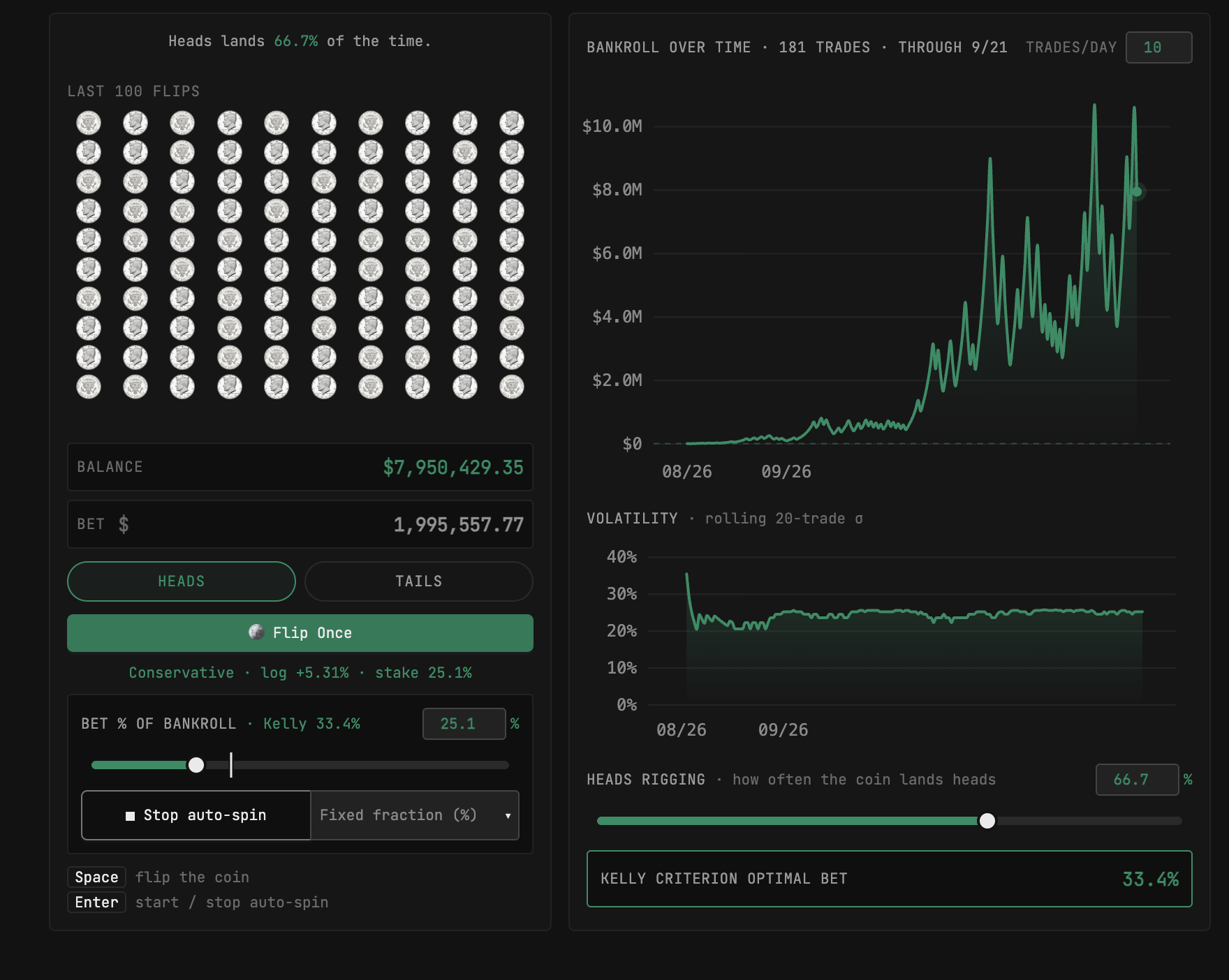
Shkreli, for the past year or so, has been building a Bloomberg competitor, dubbed Godel Terminal, and he recently made a Kelly Criterion widget that serves to demonstrate the Kelly Criterion in a more visual format.
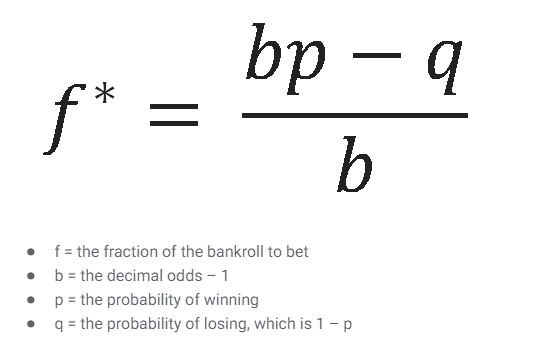
The Kelly Criterion is a mathematical formula used to find the optimal bet sizing for a series of bets/investments to grow wealth as fast as possible.
I won’t go too into the weeds of the Kelly Criterion and the tool, as the purpose of this article is about applying these frameworks to portfolio management, but the main takeaway is that you should be betting much more conservatively than you would think.
It’s also important to understand that stocks are not perfectly analogous to the coinflip example that Shkreli utilizes here for a few reasons:
Payoff profile is not the same, betting on a coin flip you risk 1 unit to gain 1. Your payoff is 1:1 but you lose everything you bet when you lose.
In equities, maybe the downside is 30%, 50%, 70%, it’s really dependent on stop loss, valuation floor, the list goes on. The upside is similar. For a multi-year position, the upside could be 2x, 5x, 10x, or even more. For a short trade, maybe it’s 5 or 10%.Also Shkreli’s coin flip game assumes you can find 10 trades/day. I’m not sure about you, but I don’t have the luck of finding a new stock that I am convinced enough to invest in on a daily basis, let alone ten such stocks.
The game also assumes the balance of the account is untouched, and there are no inflows or outflows.
Application of These Lessons
But that’s enough on stipulations. In terms of takeaways from this game and the Kelly Criterion on the whole, I would say a few things:
The biggest takeaway that you should have from the Kelly Criterion is that if you do not have an edge, you should not bet. With a 50% probability of winning and losing, the optimal bet size is zero.
Second, over-betting is possible. See the below excerpt from a great piece on Probability and Payoffs by Michael Mauboussin and Dan Callahan at Counterpoint Global
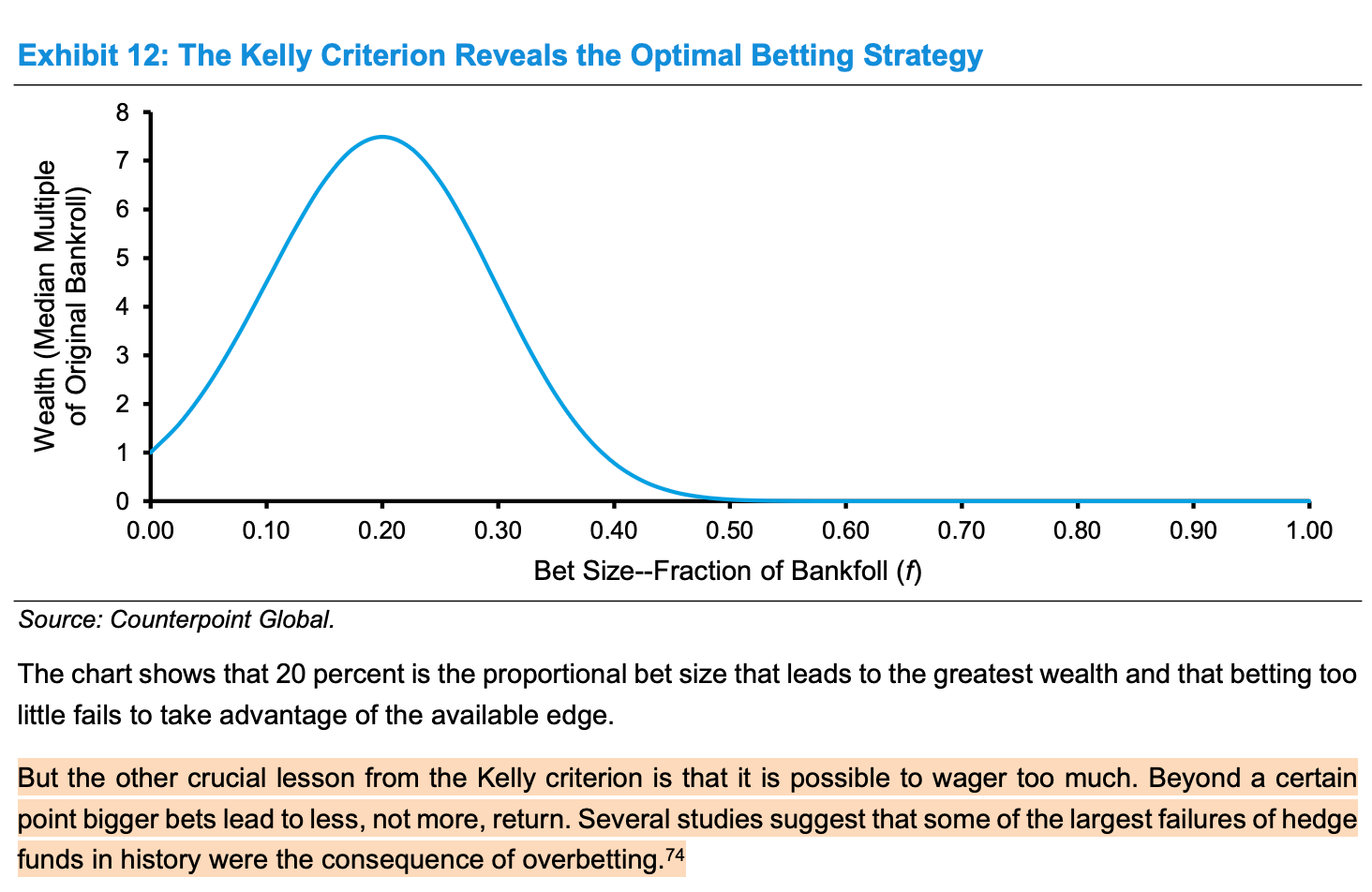
Because overbetting is possible, especially when using the Kelly Criterion for investing, there are valid arguments to utilize 1/2 or 1/4 Kelly to lower the volatility. You get roughly 75% of the growth at half the vol by using 1/2 Kelly.

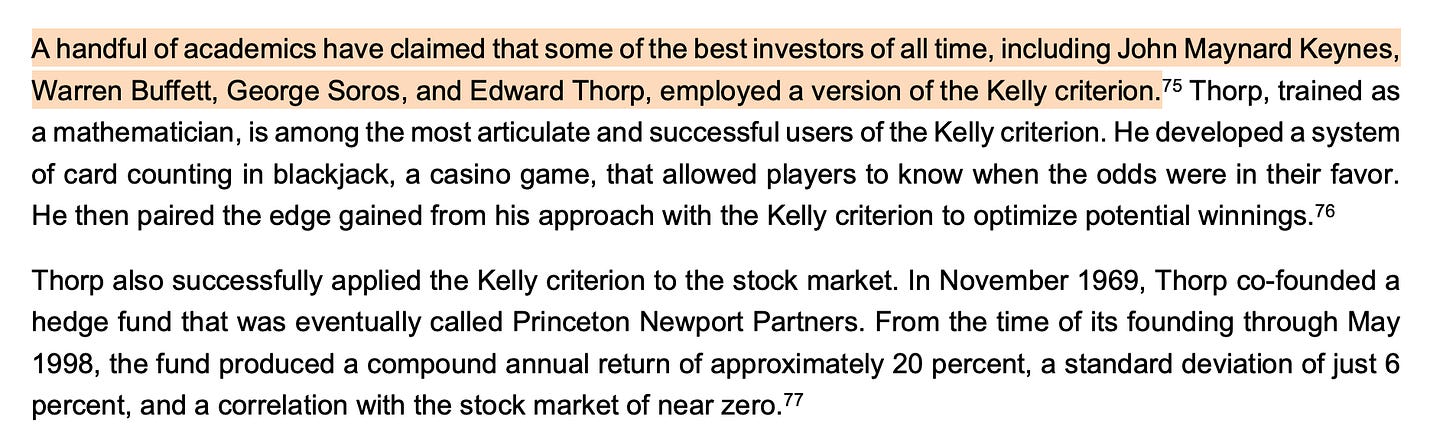
There is evidence that Buffett, Soros, and many other great investors, whether knowingly, or it coming to it from other means, seem to apply the Kelly Criterion to their stock market practices. You probably should too.
It’s also important to recognize that we cannot truly know what the odds of winning are when placing a bet, or making an investment in our case.
What we can do, and what I attempt to do in my stock picking, is to raise your bar for what is investable, through whatever means. For a Buffett-Munger style value investor, maybe this means your margin of safety is 30% instead of 15%. For you, maybe this means 50 or 100 hours of due diligence.Part of the utility in applying the Kelly Criterion to stock picking is not just finding the right sizing for a single position, but coming up with a comparative figure that you can use to size multiple positions within a portfolio. Part of good portfolio management is managing opportunity cost.
For every dollar you allocate to NVDA, that’s a dollar you could allocate to another company. Is NVDA better than every stock in the market? Probably not, but you can’t do due diligence on every stock in the market. But you can compare NVDA to other companies you have done the work on, and determine based on your relative view on each of those, how you should allocate to that.
This is part of why active management is such a tough game, there are countless opportunities out there, but you have to do the work in turning over those stones.
As you turn them over, you should try and assign a value, a score, anything based on your confidence in them, catalog it, and use that aggregated information to build a diversified portfolio of positive EV bets.Like I’ve mentioned above, it’s unlikely that you will be able to accurately forecast your odds of winning, and that’s not really the point of this exercise anyways. The point is that you should go through the thought process of trying to forecast.
This practice will force you to assign measurable figures for what used to be your “gut feeling” about a stock. It will help you detect patterns between the investments you gravitate towards and why.It will also be useful to look back on and ask, “where did I go wrong?” or, “What assumptions did I underwrite which didn’t come to pass?”
As you forecast, review your forecasts, and make more for the future, you should get better at it. It should serve to help bring words to feelings and make you more confident in your investments and in your thought processes.


Quotes & Anecdotes on Portfolio Construction
To end this article, I wanted to give you some anecdotes and statistics which lend credibility to the difficulty as well as the importance of the art that is portfolio construction.
"I have two basic rules about winning in trading as well as in life: ‘If you don't bet, you can't win. If you lose all your chips, you can't bet,’” from Larry Hite’s interview in Market Wizards.
“All you need for a lifetime of successful investing is a few big winners, and the pluses from those will overwhelm the minuses from the stocks that don't work out,” from Peter Lynch.
Buffett: "Diversification is protection against ignorance. It makes little sense if you know what you are doing."
Munger's version: "The idea of excessive diversification is madness."
Druckenmiller has echoed the old Carnegie line: “put your eggs in one basket and watch it closely.”
Modern portfolio theory suggests that holding 20 to 30 stocks from different industries captures most diversification benefits. A portfolio of 25 well-diversified stocks can eliminate about 90% of unsystematic risk, according to empirical research.
It’s important that I emphasize “well-diversified” here. Twenty AI infrastructure bets is still one bet.
Conclusions
Taking in all of these quotes, books I’ve read, as my lessons from my own experiences in the stock market, I’m left with a few concrete takeaways that apply to all investors:
The first and most important rule of capital allocation is to not lose money.
If you’re gonna bet big, you need strong conviction, and you better be right.
It’s very hard to be right, and to consistently be right over many investment cycles.
If you don’t have the time, energy, or temperament for this game, you should stick to ETFs.
Time in the market does beat timing the market. There’s a reason I like to go long-dated with the options plays I do, and it’s because while I may have conviction a stock is cheap, I don’t have conviction that a certain event will make the market agree with me.
Valuation matters, and don’t listen to anyone who tells you otherwise.

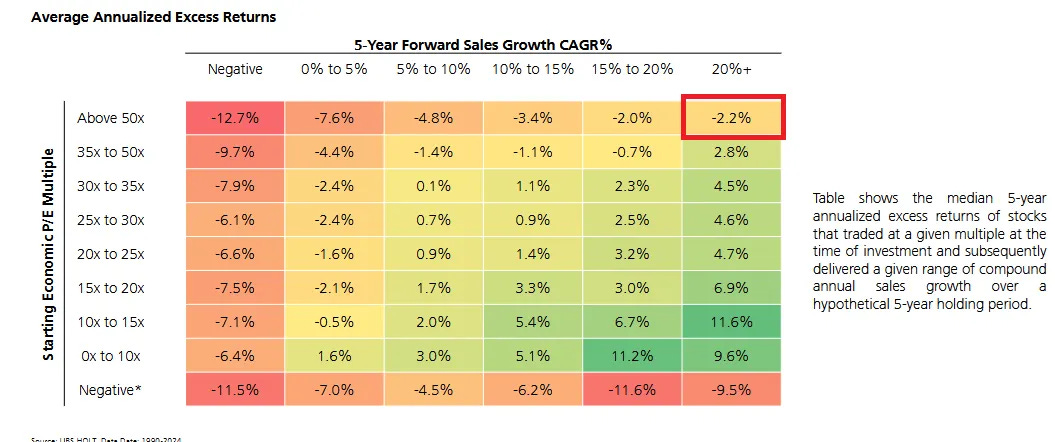
I’m not saying there are no investments that work at 40x earnings, but I am saying that your hit rate is bound to be lower the higher the earnings multiple of the stocks you invest in.
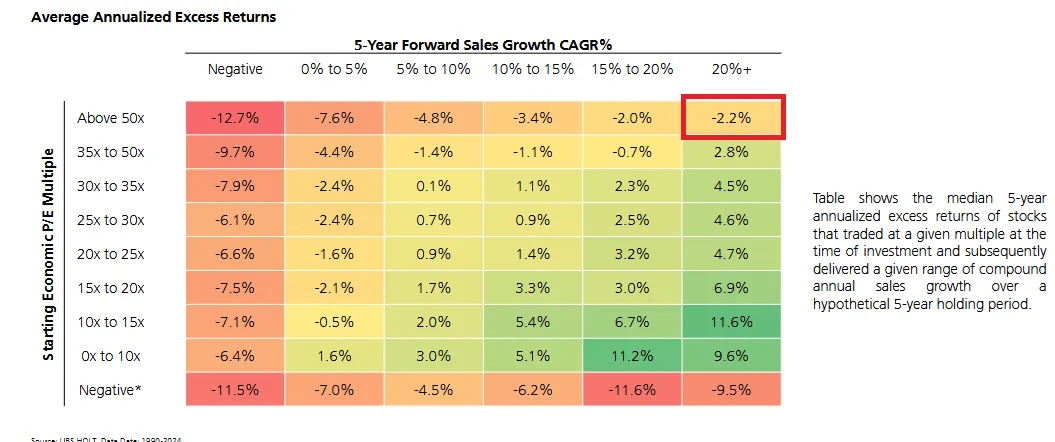
some data to back that up

At the end of the day, you have to decide what cross to bear. Concentration and potentially higher returns with higher volatility? Or diversification, and its tradeoffs? In my own portfolios, I opt for concentration and have to be comfortable with higher volatility as a consequence of that choice.
Enjoyed this article? Consider subscribing, leaving a comment, or check out my most popular posts:
META: Social Media's Big Tobacco Moment?

$META is back below $550 ($525 at the time of writing this) for the first time since the April tariff scares of last year — despite significant financial improvement since then:
Commodity Futures Are Simple, Actually

Last Fall, I sat down in my Derivatives class fully expecting to feel like I did in AP Calculus back in high school. In over my head, totally confused, etc.