

Escape from Tarkov is a PvPvE extraction shooter. For the non-gaming initiated, this means that you bring in gear, attempt to find loot and valuables, and fight against players (real humans) and bots. After shooting and looting, your goal is to extract (survive) the raid and bring your spoils of victory back to your hideout.
After putting more hours into Tarkov than I’d like to admit, I’ve realized that I’ve learned many valuable lessons applicable to life and, more importantly for this Substack, finance.
As a result, and from seeing absurdist articles/videos doing well across social media, I thought I could share some of those lessons and relate them to the real world.


Lessons Learned: Escape From Tarkov
Bringing better gear into the raid increases your odds of success. Whether it be a better gun, or a helmet that stops more bullets, there is a reason to bring in better gear, even if it’s expensive.
Relating this to real life, there’s a cost to preparing for something, whether it's a job interview, a presentation, or a sports game. In my view that price is worth paying in almost all cases.Building on the last point, you can bring the best gear into raid, or do the most preparation for a job interview, and still fail. There is an asymptote to increasing your odds of success, and past a certain point you have to leave things to chance.

Sometimes things are outside of your control. In Tarkov, maybe that means you died to a cheater. In real life, maybe that manifests itself differently. You lose out on a job opportunity because it’s too far away, or someone better connected gets that chance, even if they’re less qualified.
In video games, as well as life, you cannot make progress without first taking risk. In Tarkov, there’s a hideout where you can craft things and buy and sell items on an in-game marketplace. You can make small amounts of money here from the safety of your hideout, but you can’t make substantial progress. To do that, you must go into raid, and fight other players and AI.
Life is similar. You might be able to study something at home, learning what people have done in the past. You may even be able to apply some of what you learned. But to make real, measured progress, you need to act in the real world.Sometimes it’s best to cut your losses. Oftentimes in a game like Tarkov, you can get pretty wounded, but still be alive. As a result, you’re forced to make a decision, continue on in your weakened state, or just return to your hideout and come back another day.
Life, and finance specifically, is pretty similar. In real estate development, one of my professors told me of cases in which something along the development process went poorly, and as a result, they just handed the keys back to the bank and walked away, citing that “it’s not worth it to put good money after bad.”More cooks in the kitchen doesn’t always lead to better outcomes. In Tarkov, there’s no team UI, which just means that you have to keep track of who’s who, and know where your teammates are to ensure you don’t end up fighting each other. As a result, there are some benefits to playing alone, namely that when you hear a footstep or gunshot that isn’t yours, you know it’s an enemy.
In life, this can work similarly. Not in the sense that you don't know who's on your side. That doesn't really happen. But sometimes you get more done working alone.
how i felt typing this section Decisions fueled by frustration rarely work out. I had a friend who I’d commonly play Tarkov with, and sometimes he’d shoot at an enemy and miss. For most players, after missing a shot, they would just move on and continue about the raid as normal, as giving away your position makes it harder to fight that enemy.
But for my friend, he would get annoyed, and try to fight them anyways. This commonly led to him pushing into an enemy who knew he was coming, where he was coming from, and how to set up and ambush him as a result of that.
This lesson draws parallels to a quote from earlier: “don’t put good money after bad.” It’s a simple, yet effective rule for making better decisions. If you mess something up, sometimes it’s best to just walk away.Mitigate risk whenever possible. In Tarkov, you can loot bodies of enemies that you kill, but it puts you at risk, as you are a stationary target. To combat this, you can crouch or lie down to make yourself less noticeable. You can also skip looting entirely to not take this risk.
In finance, you can minimize risks similarly. By sizing positions small, setting stop losses, or using a margin of safety, you can manage your risk.If your gut is telling you something, you should listen. After countless hours and raids in Tarkov, my gut was pretty well calibrated to tell me when and where I should expect to see enemies, or where I was most at risk of being shot at.
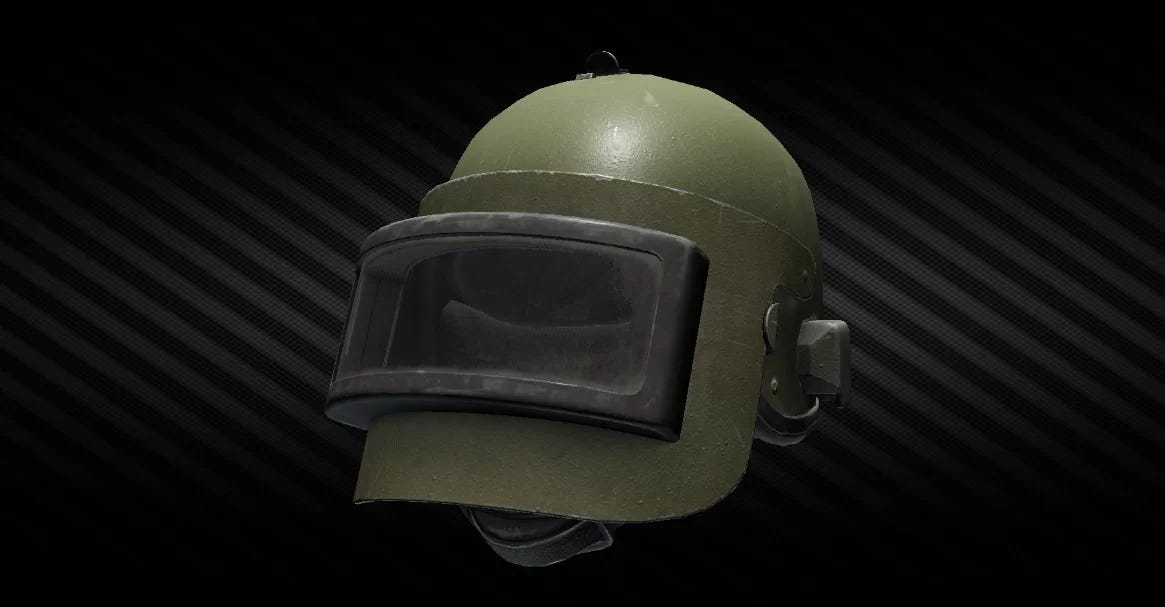
Sometimes, I couldn’t explain exactly why I felt something was off, yet seconds later I was being shot at. What I’ve learned from this is to trust my gut. While this doesn’t apply one-to-one with finance, where feedback can be muddied, I think the takeaway is clear: trust that feeling.There’s no way to guarantee success. Put differently, there is always risk of failure. With a game like Escape from Tarkov, you have many different ways of increasing your odds of success, but there are never guarantees. You can wear level six armor, an Altyn helmet (seen below), but there is no guarantee that these things will help you.
Realizing and accepting that sometimes you will lose is a freeing experience. It’s much easier to move past a loss when you have the mentality that losing is part of playing the game in the first place. It’s what makes winning that much better.
People pay for novelty. In Tarkov, there’s a knife you unlock as part of prestiging (getting to a certain level and resetting your account). This knife has no utility, other than looking somewhat cool. As a result, I was able to sell it on the in-game market for a sum that vastly outweighed its utility.
Exclusivity increases value. There are in-game cosmetics (clothing) that require you to kill a boss 100 times. This grind is cumbersome and time-consuming, and it drives people crazy. As a result, people sell accounts for real life money that have this boss outfit.
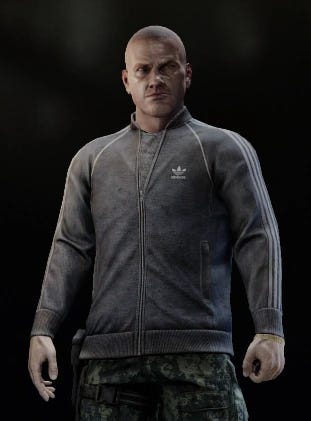
the Adik Tracksuit This is similar to a Veblen good, where demand goes up as price goes up, except the currency here is time instead of money. Nobody wants the outfit because it looks good. (In fact, it’s kinda bland compared to the newer clothing they have released.)
They want it because it proves you killed the same boss a hundred times, and there's no way to fake that. If this thing took 10 kills to unlock, you'd see it everywhere and nobody would pay for an account to get it.



All of this is to say, a few things stood out once I had them all in one place:
Take action, and more importantly take risks, because that’s how you can make real progress
Become comfortable with loss, and the fact that not everything is in your control
Come prepared, but accept that there are limits to how much you can increase your odds of success
Don’t put good money after bad
I plan to turn this into somewhat of a series, so if you enjoyed this, and/or want to hear my takeaways from games like Rust, Settlers of Catan, etc., make sure to subscribe.
Enjoyed this article? Consider subscribing, leaving a comment, or check out my most popular posts:
META: Social Media's Big Tobacco Moment?

$META is back below $550 ($525 at the time of writing this) for the first time since the April tariff scares of last year — despite significant financial improvement since then:
Commodity Futures Are Simple, Actually

Last Fall, I sat down in my Derivatives class fully expecting to feel like I did in AP Calculus back in high school. In over my head, totally confused, etc.