

What I’ll cover today:
Why 60% of S&P stocks are in a bear market
Stocks to look (and not look) at and why
Where we go from here (and how to position yourself)
60% of S&P 500 stocks are 20% or more below their all-time highs, yet we are within 1% of all-time highs as an index. (Morningstar)
How’s this possible? The tech sector is carrying the index. They're carrying the 'E' in the index's P/E, and that’s why the market still looks rationally valued.

The biggest stocks are earning the most, and the stocks that aren’t earning at record levels are being re-rated lower. See: MCD, LULU, NKE, etc. There are stock-specific reasons why these are down, but many non-tech stocks are down because the AI trade is sucking the air out of the room.
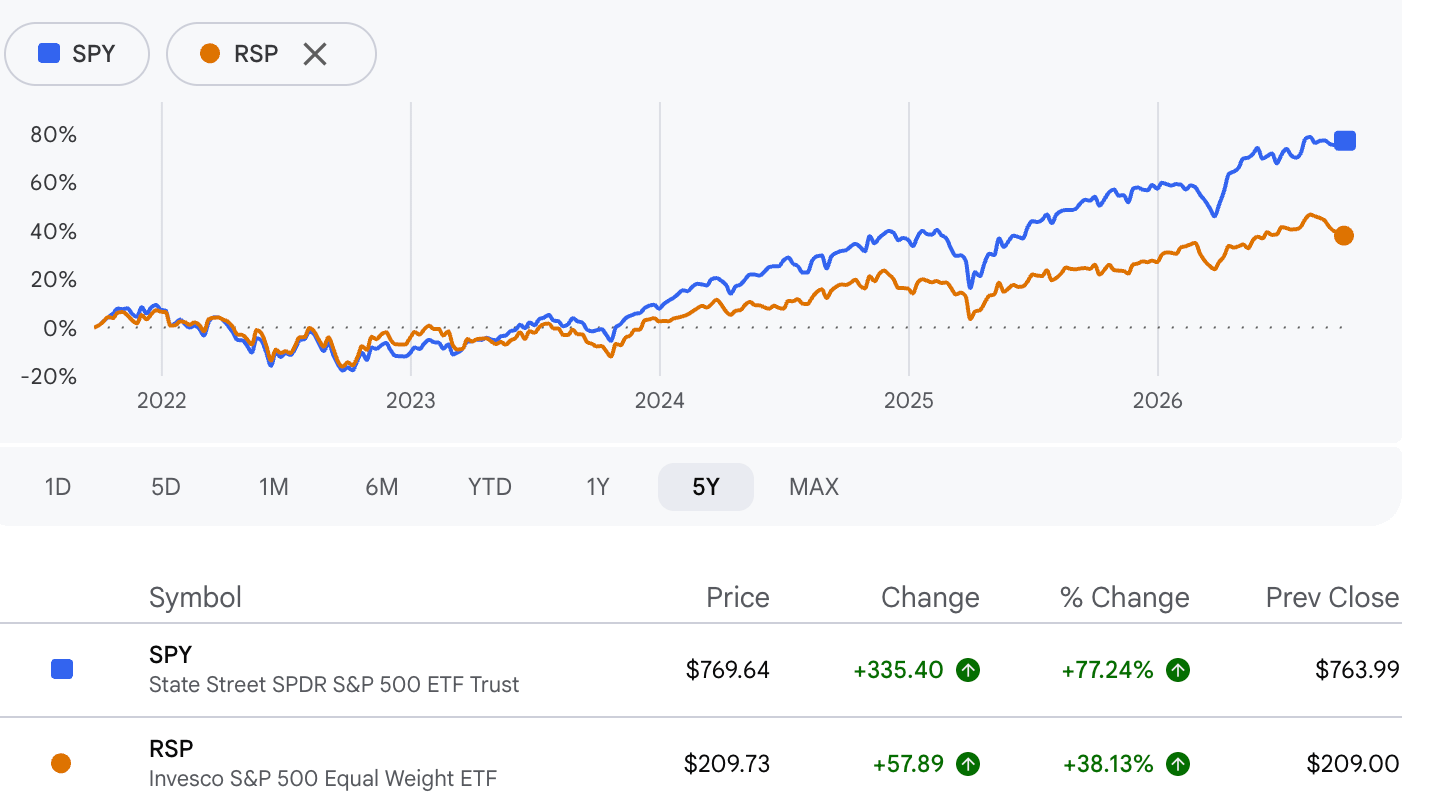
This makes sense. If I can buy NVDA growing at 70%, buying back hundreds of billions of dollars’ worth of shares a year, why would I buy anything else? But mechanically, within your portfolio, it can create an uncomfortable amount of risk.
So today I want to look at the types of companies to buy, which to avoid, and where we might go in the broader market from here.
What to Buy and What to Avoid?
In recent months, stocks like McDonald’s and Nike have become talking points amongst market participants.
Currently, MCD is down over 30% from its all-time high, and at its lowest valuation since the COVID crash in 2020. Nike is down 78% since its 2021 peak, and if you bought all the way back in 2013 (I was 10 years old!) you would be down on that investment.
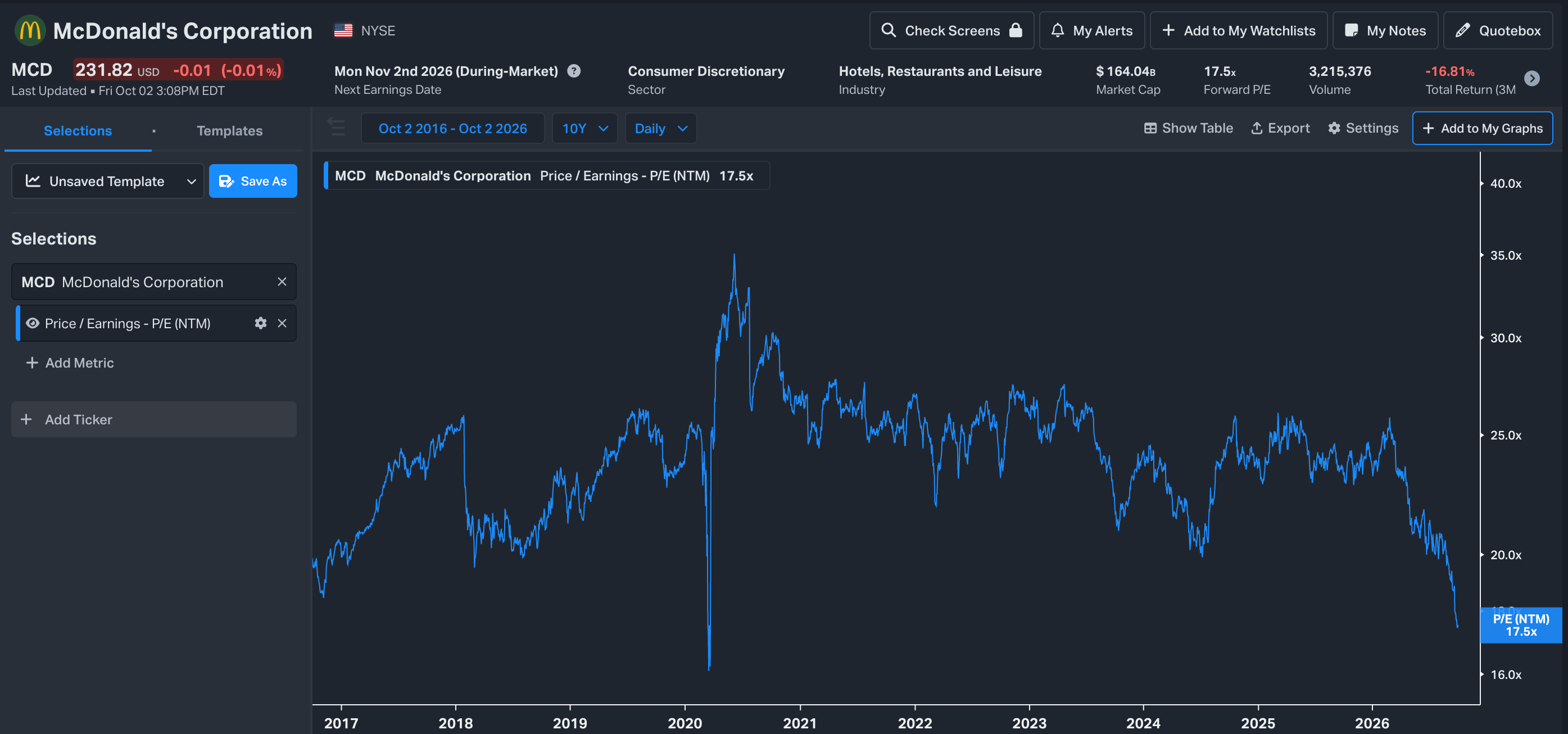
This is a good warning against single-stock investing, but isn’t my actual point. Nike is down so much due to upstarts (Hoka, On) and consumer spending shifting away from its brand, while MCD is down due to fears surrounding the consumer, the conflict in Iran, and inflation.
If I had to bet on which decline is more structural, my money's on Nike. I think with the advent of Shopify, combined with the effectiveness of Facebook ads, the moat for legacy brands like Nike is near zero. You can buy much cooler, more affordable athleisure clothing with ease nowadays. Additionally, Nike still trades at over 22x earnings, a 30% premium to McDonald’s!
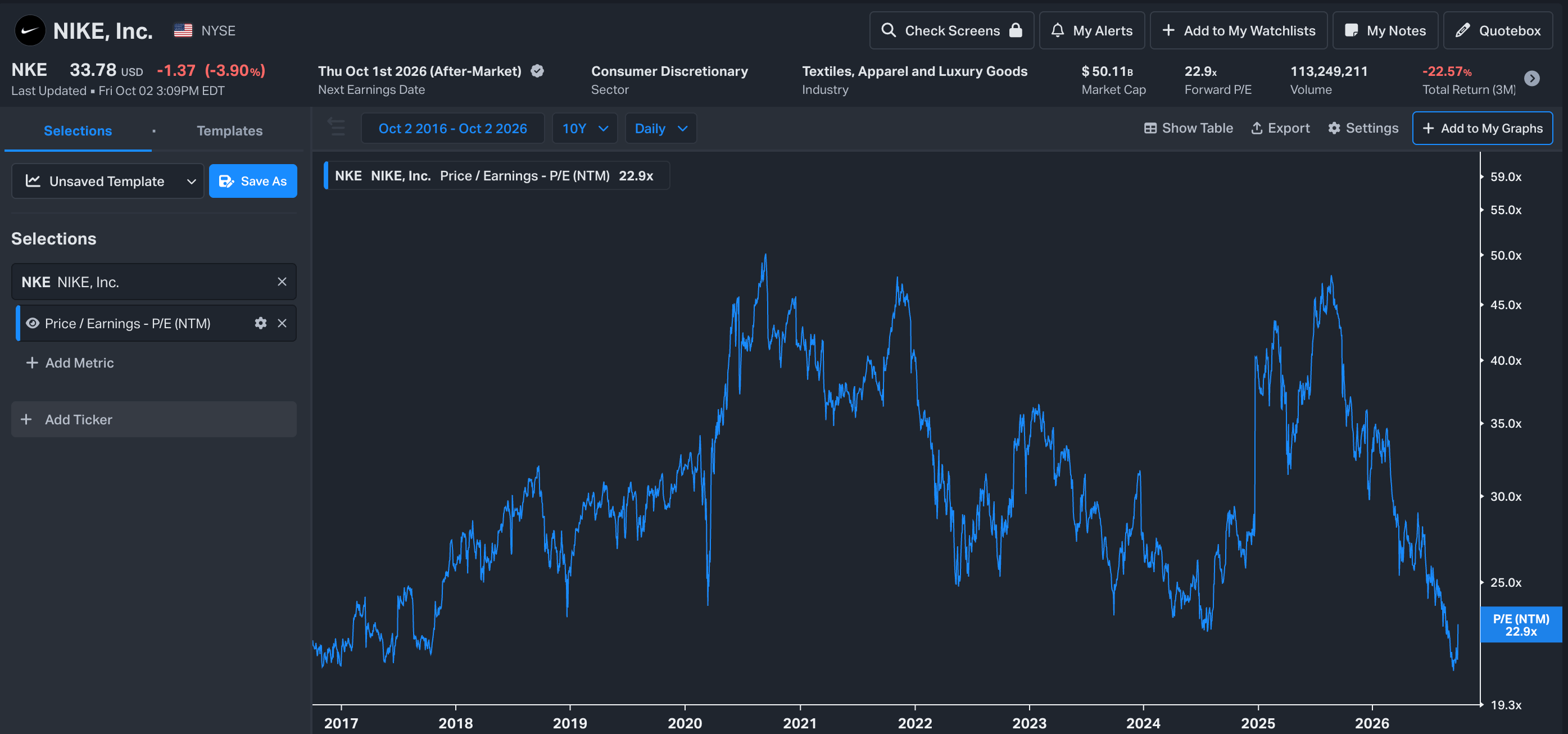
If we look at MCD, you can’t replicate its scale and worldwide footprint without spending billions of dollars. If the Iran conflict were to end, which it must at some point, McDonald’s and other inflation-impacted companies seem poised for a re-rate back to their historical multiples. While the conflict and oil crisis could continue and weaken the consumer further, I think demand for food is a lot more inelastic than demand for athleisure.
I’m not calling for a bottom in McDonald’s here, just saying that if I'm shopping today, I'd focus on names that have struggled because of shorter-term issues.
While Nike could be ripe for a turnaround due to new management coming in, and new marketing efforts, I believe bottom fishing in stocks similar to McDonald’s would yield better forward returns from here. I think if we get MCD around a 15x forward P/E ratio (~$205/share), that might make it a no-brainer.
Where Do We Go From Here?
Before I wrap this article up, I want to discuss what happened in the 2000 dot-com bubble, specifically to the same cohort of S&P 500 stocks that were in bear markets near the top.
While it’s hard to disaggregate which stocks were specifically in bear markets in 2000-2002, what we can do is look at equal-weighted S&P returns vs. market-cap-weighted returns. This demonstrates the benefit of diversifying away from the top-performing stocks, and allocating equally to lesser-performing ones (think NKE and MCD today).
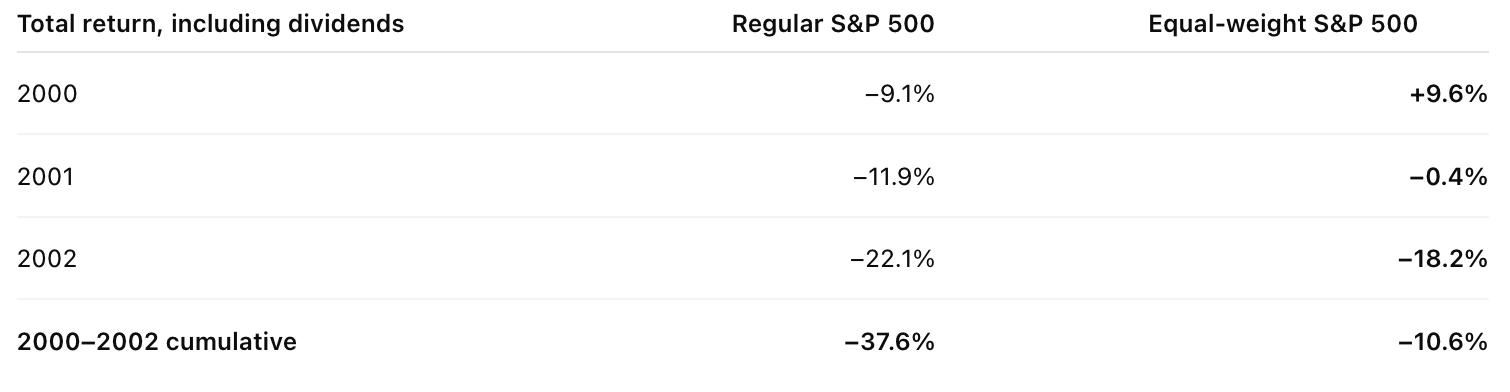
Cumulatively, from the 2000-2002 unwind, you outperformed the market-cap-weighted S&P by 27 percentage points if you allocated to the equal-weighted S&P. Instead of losing 37.6% of your money, you’d have lost only 10.6%. In a 37.6% drawdown, you need a 60% return to get back to even. In a 10.6% drawdown, you only need a 12% return to get back to even.
I’m not saying that today’s market is the same as the dot-com bubble. There are countless reasons why “this time is different.” OpenAI’s and Anthropic’s revenue charts are parabolic. We are on the path to artificial superintelligence. Every day I am astounded by what AI can do.
I only bring this topic up because if you’ve performed really well over the past few years, allocating a higher % of your portfolio to more conservative names could make sense. Obviously, it’s a little ironic that I’m writing this after posting an article about how I’m bullish on Oracle and its AI efforts, but I think a barbell approach might make sense here.
That said, I am still very much exposed to the AI trade within my own portfolios, but I’m open to increasing my more conservative exposures in an attempt to mitigate larger drawdowns.
This is not financial advice.
Enjoyed this article? Consider subscribing, leaving a comment, or checking out my most popular posts:
Small Edges that Can Change Your Financial Future

In investing, as in life, the small things add up over time, compounding to much larger differences in the long run. In today’s article, I’ll go over three ways to get the most out of your investments and explain how each can save (or make) you real money.
How Much Should You Bet?

Position sizing is a conundrum. On one side, you can make a ton of small bets, and even if some go to zero, the odds are in your favor of having a favorable overall return. On the other end, you can make a few large bets, with the potential of outsized returns, while increasing the overall risk of ruin.