

Dune is one of my favorite books of all time, and in recent years the Villeneuve films have grown Dune’s popularity. So it’s funny when I see people use AI to ask simple questions, outsourcing critical thinking to an LLM, especially if it’s about Dune.

The author of Dune, Frank Herbert, was something of a sci-fi visionary, at least to me. One of the main concepts within Dune’s world building is that there was a war between humans and what he refers to as “thinking machines.”
The Butlerian Jihad, this war between humans and thinking machines, had drastic effects in the Dune universe. The Orange Catholic Bible added a commandment:
“Thou shalt not make a machine in the likeness of a man’s mind”
The knock-on effects of the Butlerian Jihad are what I find more interesting. (I know this is some nerdy shit, but I’m getting to the point)
The ban covered any machine that “thought” like a human, down to simple calculators. In a civilization where space travel is normal, this poses many problems.
Dune’s solution to these complex problems is to elevate the human mind:
“It forced human minds to develop. Schools were started to train human talents.”

In today’s world, I see the very early signs of humans outsourcing our thinking to machines. In my later years of college, namely 2024 and 2025, when LLM capabilities were vastly improved, many of my peers had a mindset of “let’s just have Chat do it.”
I cannot even imagine how high schoolers or kids entering college today rely on AI.
But this phenomenon is not localized to just students. I see countless examples of people using LLMs for tasks (or thoughts) they could have done (or thought) themselves.
So What? What’s The Big Deal?
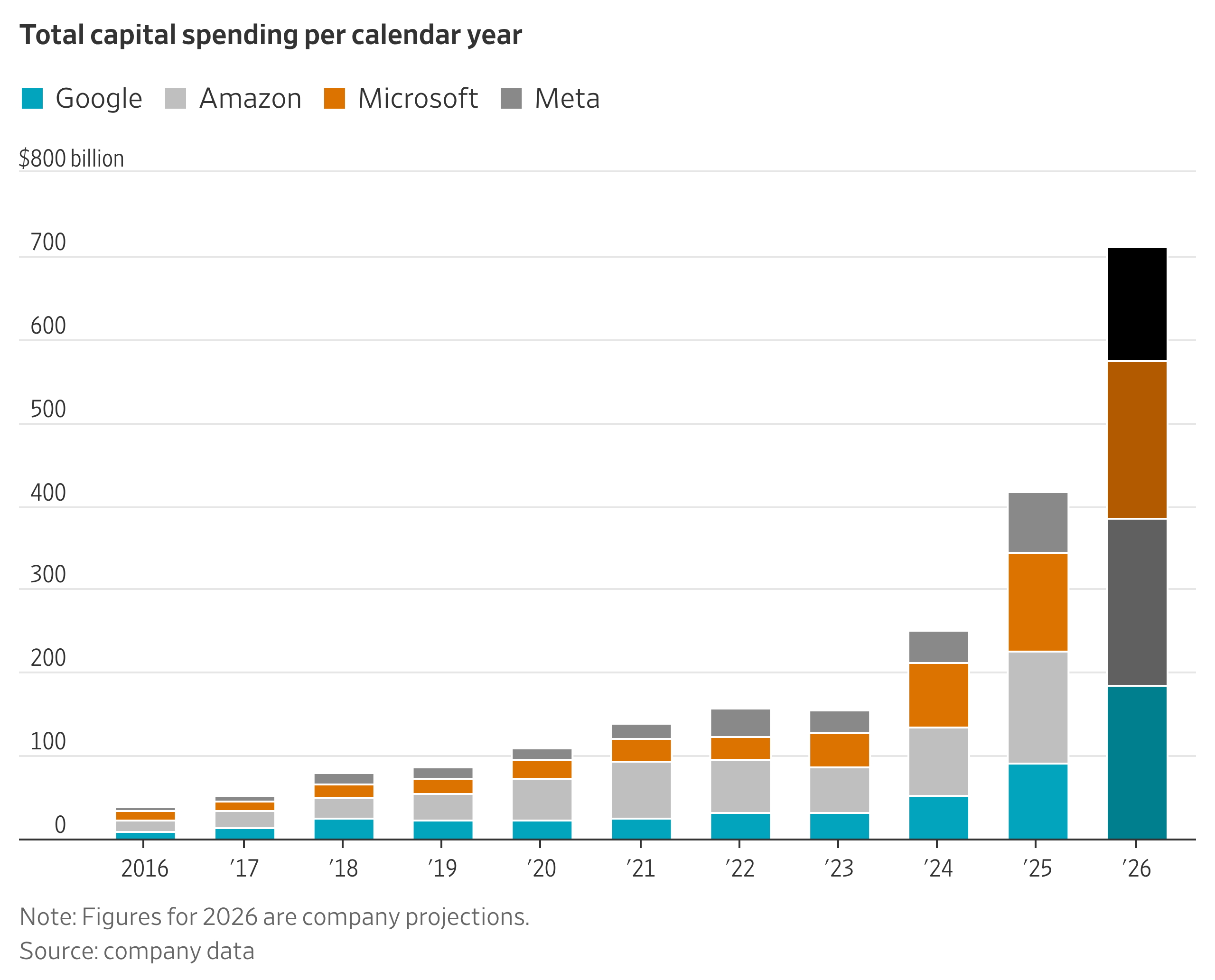
When this topic gets broached, I typically hear the response of so what? We are spending trillions of dollars developing this technology; it’s happening and there’s no stopping it.
I don’t want to stop the progress of AI. I want it to rapidly improve and for people to use it to cure diseases, increase productivity, and help humanity. My fear is what happens to us.
I fear that if someone starts using Claude at 11, and is able to ask it for help whenever they get stuck, what will they ultimately learn? And for those of us who have gone through school already, how much of our knowledge/intelligence will atrophy from rampant AI use? How much already has?
How do we protect ourselves from this?
I have not been immune to AI reliance myself. I constantly ask Claude or ChatGPT for EPS projections, or historical figures, when I could easily run the numbers, pull up the 10-K, or find the estimates.
But I don’t. Is it laziness? Ease of access? Probably both. But over the long run, how will I gain more experience or be able to identify patterns between companies or situations?

If my first resort is to ask Claude, I remove a layer of friction where I am forced to think of why something may be occurring.
When I had to write a free-response paper in ninth grade English class, I had to think back on the characters, prose, setting, motivations, and plot of the novel I was answering a response on.
My brain had to juggle all of those, while simultaneously crafting a coherent response to a sophisticated question posed by my teacher. All within 38 minutes.
I’m ashamed to admit that my brain has not had to work that hard in recent years. Between scrolling Twitter, watching YouTube, listening to podcasts, my brain rarely gets a quiet moment.

My brain takes in more information weekly than I probably took in within a single month of high school. But it doesn’t utilize it. Or fully retain it. It just takes in information, then makes more room for whatever podcast comes up next, or whatever WSJ headline catches my attention next.
Maybe I am alone in this experience, and everyone else is mindful of their use of this technology. From what I have seen personally, I am not.
There’s No Butlerian Jihad Coming
We’re (probably) too early for a war against these thinking machines. As AI proliferates throughout our economy and society, it is undoubtedly going to drive massive benefits, at least in the near term.
We may never have a war between humans and AI, and that’s not why I wrote this article. I think the more useful takeaway from Herbert’s Dune is that instead of stalling AI progress, we need to stimulate human progress.
There’s not going to be a ban on thinking machines, at least not for a long time. To improve your thinking, you will have to impose these bans for yourself. Restrict yourself from using a calculator, and work on your mental math. Write, or journal, and sit with your own ideas without asking an LLM to organize them. Go through analog processes, build out your own Excel models, and dig into assumptions by yourself.
Ultimately, I think the unlock will be using these LLMs to create hyper-personalized learning modules that you can use to train your own mind, and become a Mentat of sorts.
Using AI To Think Again
As I was brainstorming this article, the realization that I was passively consuming massive amounts of information, yet not actively utilizing it, was pretty scary.
After all, what’s the point of listening to a podcast, reading a book, or watching a video if you can’t even remember or utilize the information from it?
Information Utilization
For that reason, a good starting use case for AI is a journal prompting tool. I think inverting the relationship, and asking AI to prompt you to create something is useful because a lot of the time people go to these tools so they can put low effort in, and get something out that looks half-decent.
When you invert the relationship this way, and have AI give you something to think deeper on, it can spark more creative thoughts. Now of course, journal prompts have been around forever, but what if you had one personalized to whatever you’re experiencing in your day-to-day life? One that constantly updates with new context about you and knows what you are trying to accomplish.
It can ask you something related to whatever book you’re currently reading, how the first day of a new job is going, how a project you’re working on is developing, etc.
Give Yourself Homework
Another use case that I have enjoyed recently is using AI to give myself homework. To the employed, this may seem insane. But for me, it has been really helpful. You see, in recent years I feel like my mental math and recall have declined somewhat.
In fact, I feel like I felt sharpest when I was in the middle of high school, learning calculus, and having weekly quizzes that I dreaded. I’ve realized, especially when I had to study Spanish in high school and college, that if you don’t use something, you’ll lose it.
This goes for all types of knowledge in my experience, and how can that not be scary in a time where AI can do so much for you?
What I’ve done so far, and I hope to expand this protocol significantly:
Every day, using a scheduled task, Claude creates a quick math worksheet for me to do, covering addition, subtraction, multiplication, exponents, fractions, percentages, as well as financial ratios.
Every day, Claude finds a Fermi estimate problem for me to approximate. The goal with a Fermi estimate is to get within an order of magnitude of the real answer. For example, I am tasked with approximating the number of licensed real estate agents in the US, and I go through a series of logical assumptions with the goal of getting close to the real answer.
Reading/Recall exercises: I have Claude find me an article/historical passage to read, and then do the 10/24/7 Method with it, where I answer questions 10 minutes after reading, 24 hours later, and 7 days later.
Other use cases I’ve been thinking of:
Curriculum builder for new interests: let’s say you get into writing, carpentry, or meditation. You can ask Claude to find you a comprehensive list of resources to study. You can discover new authors, YouTubers, podcasts, whatever it may be.
Reading partner: maybe you don’t need to do full-on book reports, but you can have an LLM pose or find existing questions about books as you read them, prompting deeper thought from you.
Go Analog When Possible
My main goal with these protocols is to shift the relationship between myself and AI. Initially, AI was useful for bouncing ideas off of, building simple financial models, and organizing my writing.
What I found after using it pretty extensively was that these actions, however simple or mundane they may be, grounded me in the work, and made me think more deeply. When I wrote the discount rate, or projected out future growth, I was more tied to that number. I had to assess it more closely and determine if it was reasonable.

When Claude/ChatGPT did it, I just assumed that what they gave me was a reasonable figure. I didn’t question it, and a lot of the time I’m sure they were reasonable answers. But I wasn't tied to that figure. I couldn't defend it.
When I had an LLM organize my writing, I lost the time where I would look over my thoughts with fresh eyes. I removed the opportunity for myself to reassess what I wrote.
There is a time and a place to use these tools, but there’s also a time and a place to think deeply on your own. To ask why something is the way it is, and to allow for that moment of friction where you don’t know the answer to a question. That’s why you should put the tools down every once in a while, and go analog.