Kalshi. Polymarket. Robinhood Prediction Markets.
Over the past 16 months, prediction markets have been growing in popularity and transaction volume.
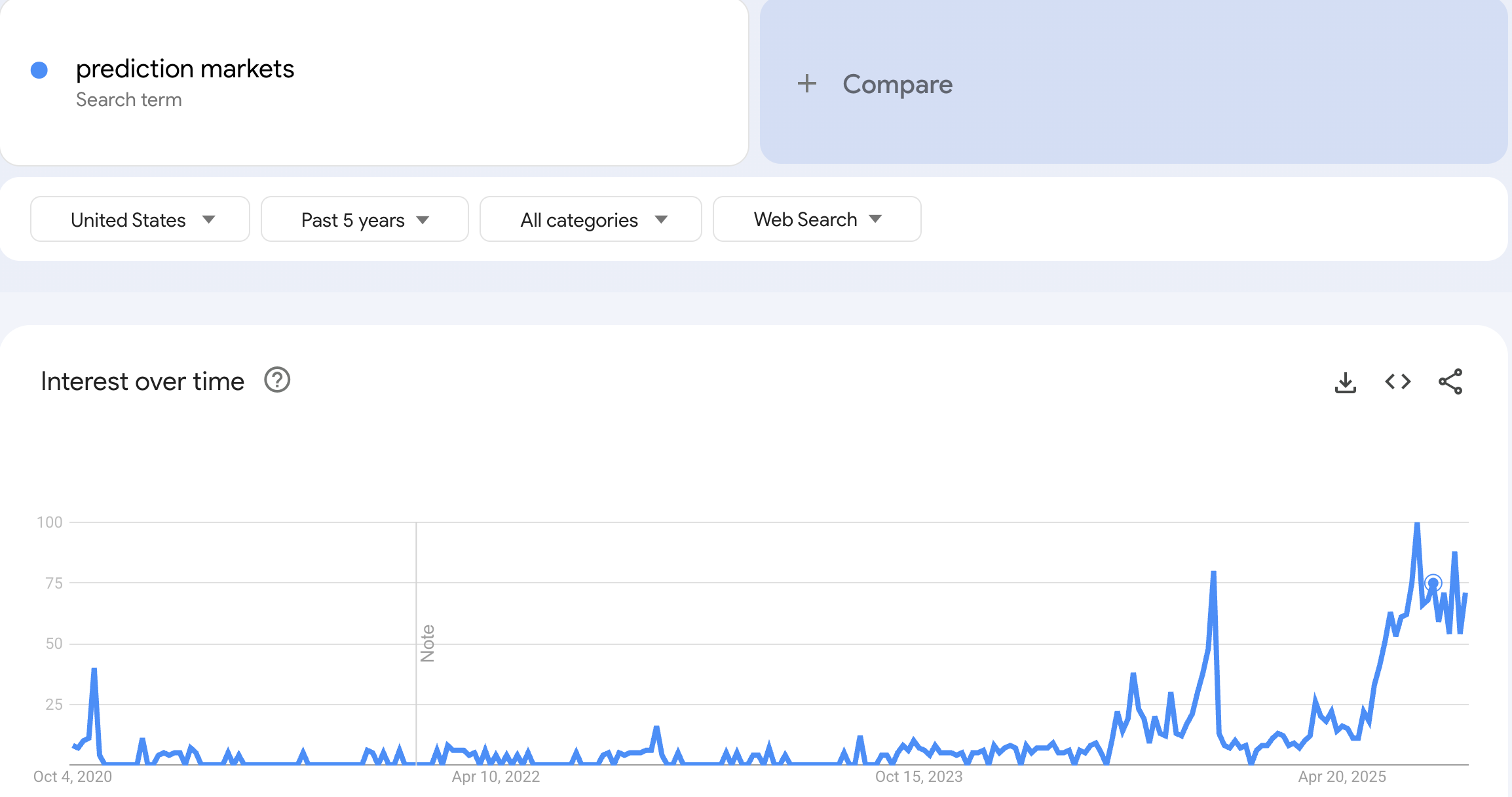
In fact, prediction market volume has grown to over $1,000,000,000 per week recently and the growth seems destined to continue as prediction market providers Kalshi and Polymarket have expanded their offerings into sports. Before I get into that though, I want to provide a quick overview of what prediction markets are, how they make money, and how they became so popular.
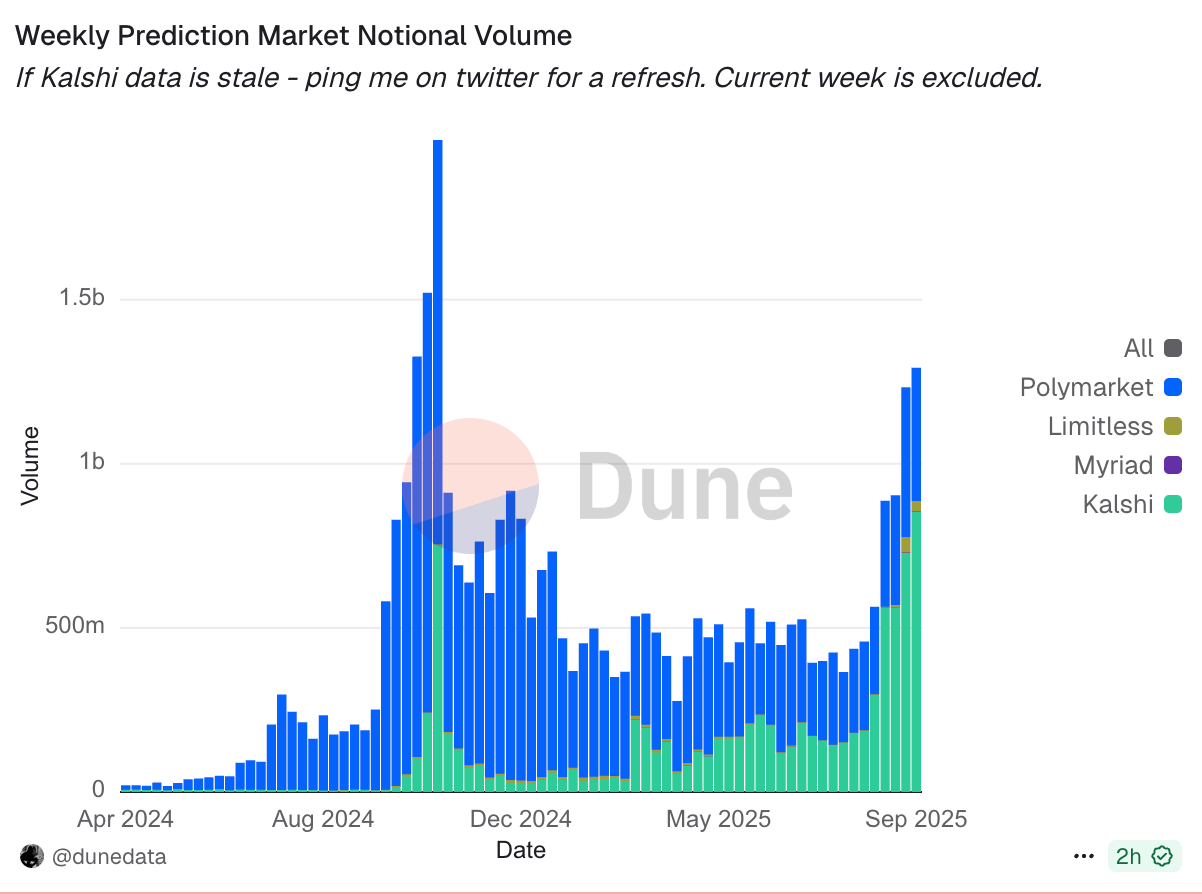
data per Dune
What are Prediction Markets?
Prediction markets are markets where you trade contracts that are priced based on the perceived likelihood of real life events occurring, such as elections outcomes, economic indicators, or sports games.
Prediction markets aggregate collective belief and multiple sources of information to price the probability of events occurring and allow participants to bet on specific outcomes through buying or selling of a contract.
For example, below is a prediction market of the 2028 US Presidential Election.
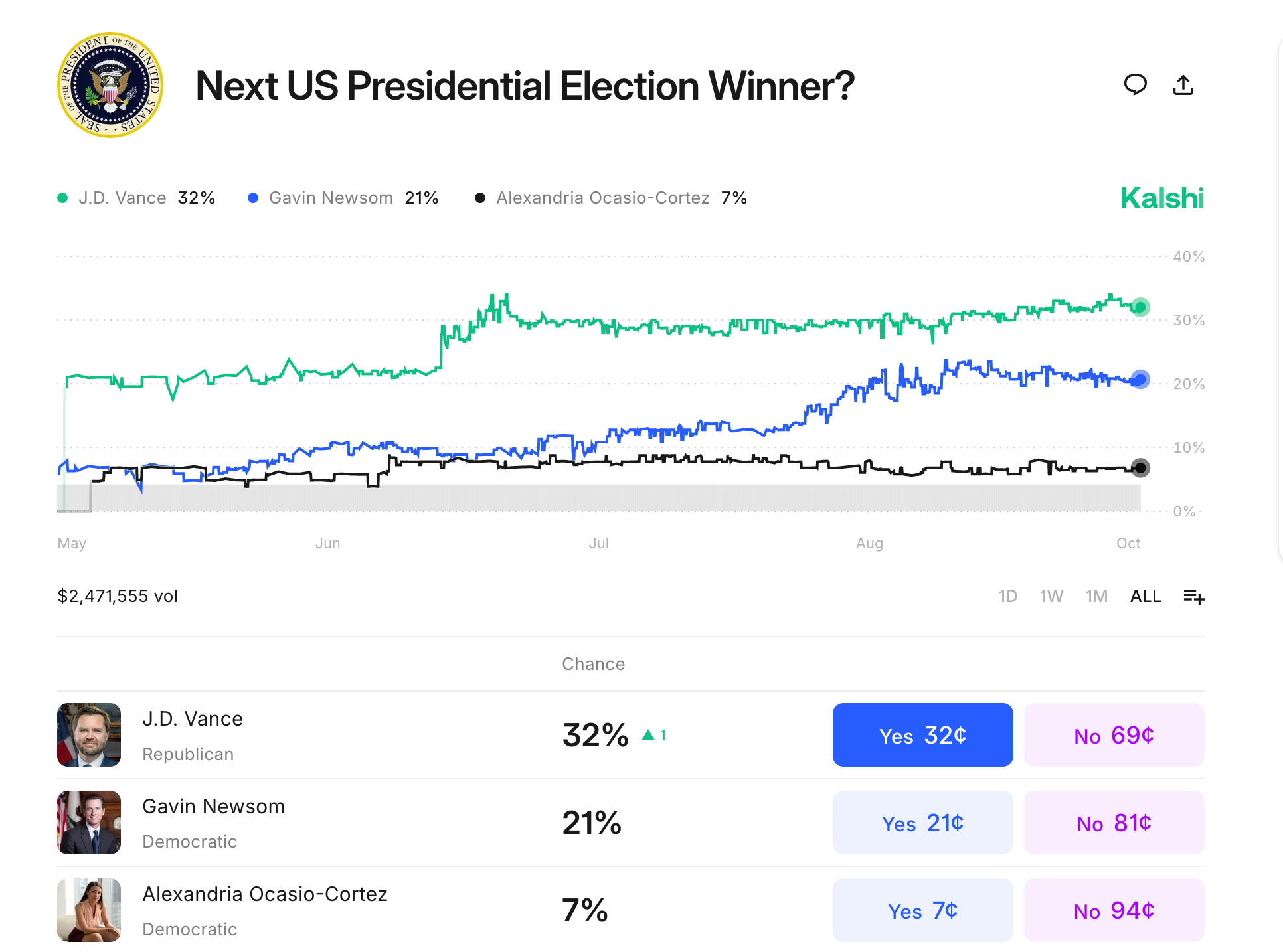
Per Kalshi, this market, “will close and expire after a person has been inaugurated as President pursuant to the next presidential election. Otherwise, it closes by Nov 7, 2029 at 10:00am EST.” So if you purchase a contract in Gavin Newsom for $0.21 right now, if he were to win the presidential race and be inaugurated, that $0.21 would turn into $1.00.
How Do Kalshi & Polymarket Make Money on This?
Kalshi and Polymarket charge a fee for providing this marketplace and benefit when transaction volumes rise. Prediction markets can also sell trading data to businesses and researchers.
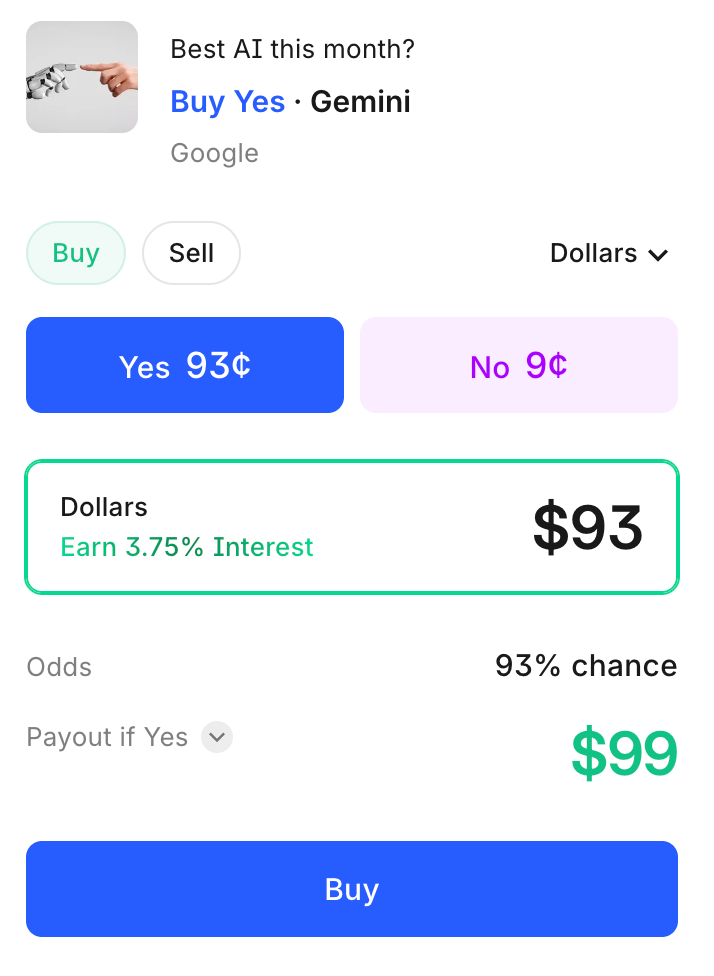
As you can see below, if I buy a 93c contract on Gemini being the “Best AI this month” I won’t make a profit of 7c per contract, I’ll only make 6c per contract. This represents Kalshi’s fee. The fee is different for each market.
Are Prediction Markets Accurate?
The next logical question is whether these markets are accurate, and I believe they are, as evidenced by how effectively prediction markets priced in Trump’s election victory last November.
As seen by anyone who followed the 2024 Election closely, prediction markets correctly forecasted that Donald Trump would be elected. From the University of Cincinatti News:
“As Election Day approached, Trump was trading at approximately 60 cents on the dollar on Polymarket. Those who bet on Trump made approximately 40 cents profit per share once he won the election.
The market gave Trump greater odds to win than most polls, which had the election at close to 50-50 odds, and was closer to the final Electoral College tally.
‘The polls are just people’s opinions; the pundits had their opinions, but there really are no consequences if they got it wrong,” Jones said. “Maybe they took a little heat in the media. But if you got it wrong in the prediction market side, then you lost significant amounts of money.’”
I believe this poll hits on the crux of what makes prediction markets valuable. With no financial repercussions or incentives, people can say whatever they want about an event’s outcome. With real money, their own money, you can bet people will make more accurate guesses, and that the wisdom of the crowd will work its magic.
How Did Prediction Markets Become So Mainstream?
One key driver of their recent surge is their expansion into sports, particularly football, which taps into a massive existing demand. Traditional sportsbooks remain illegal in many large states like Texas and California, but platforms like Kalshi and Polymarket sidestep these restrictions by operating as federally regulated financial exchanges rather than state-regulated sportsbooks.
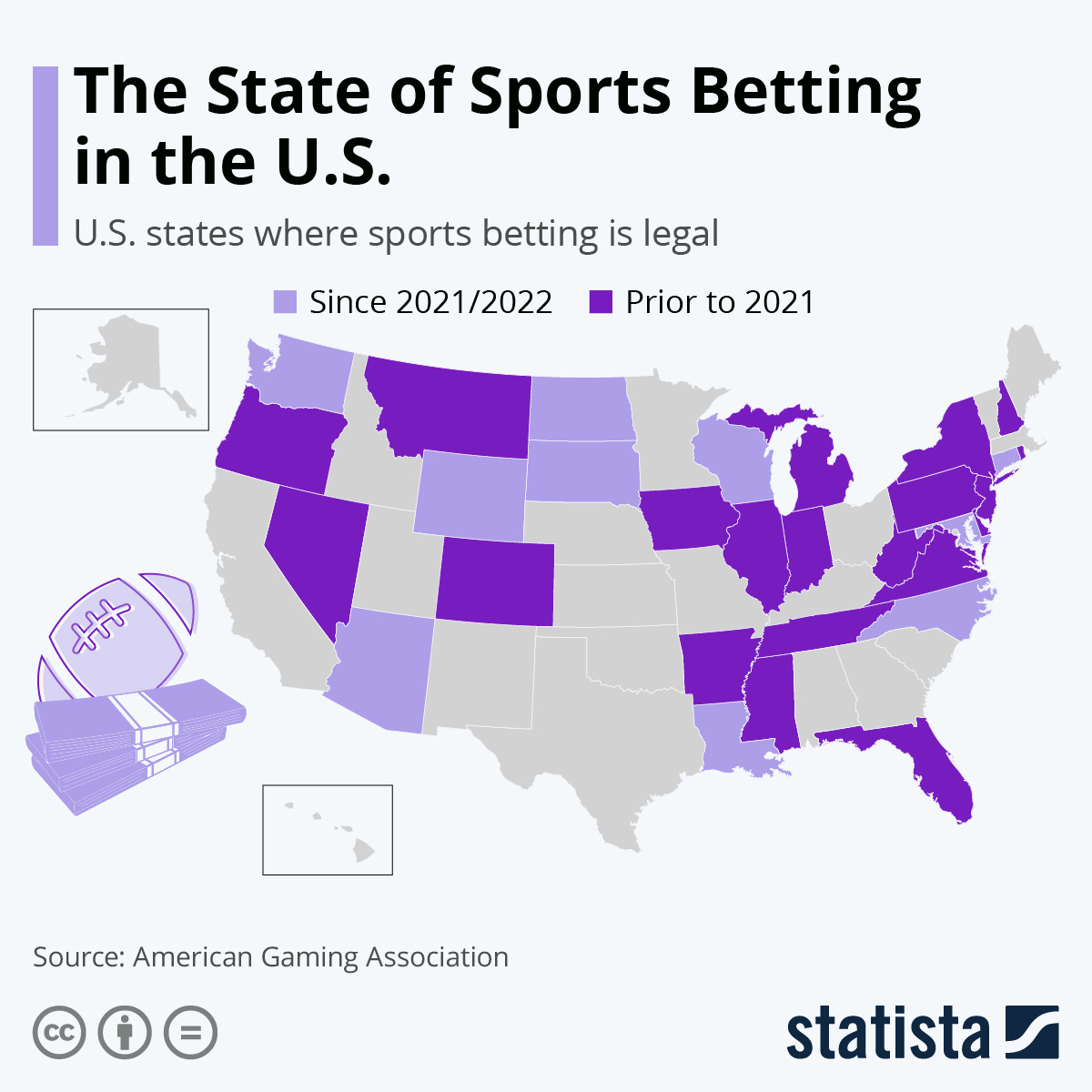
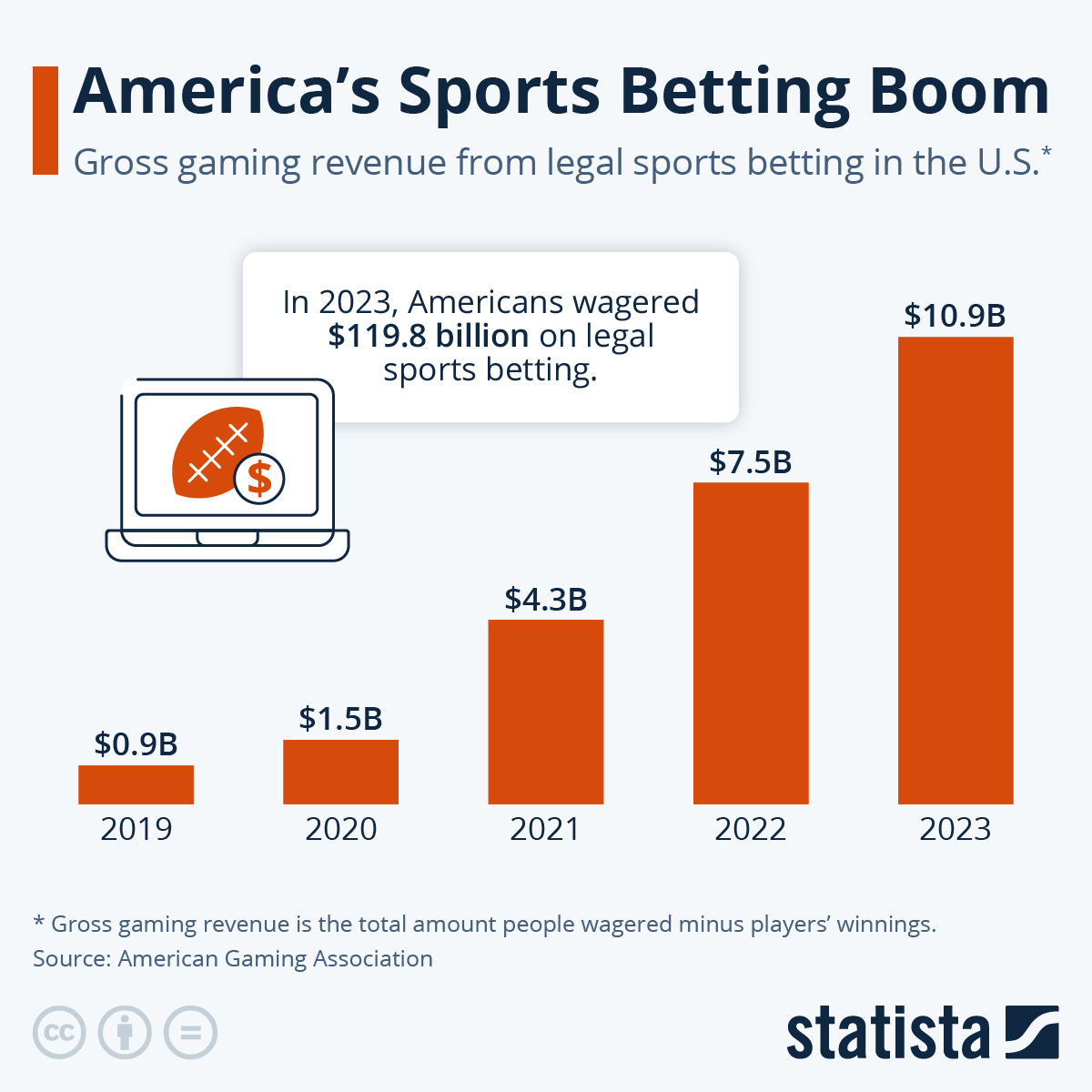
This loophole lets them offer “event contracts” on games to a previously untapped market. And the demand is enormous. Sports betting is deeply ingrained in American culture, and with college football and the NFL now in full swing, this shift has pushed trading volumes beyond $1 billion per week.
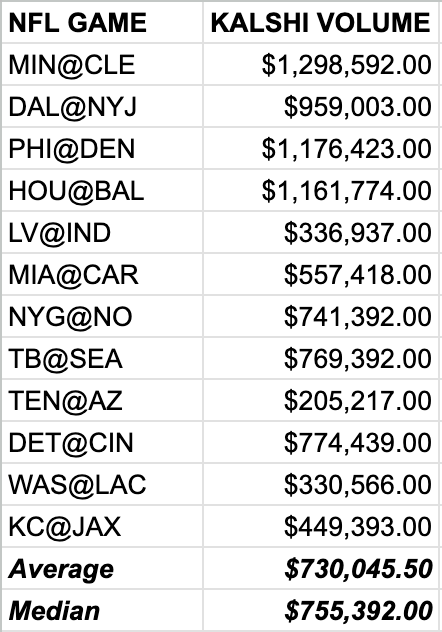
On average, $730,045 is being wagered on Kalshi alone on each NFL game. I expect this figure to rise as they become more popular, and younger generations look to gamble on sports, prediction markets could be the first place they go to.
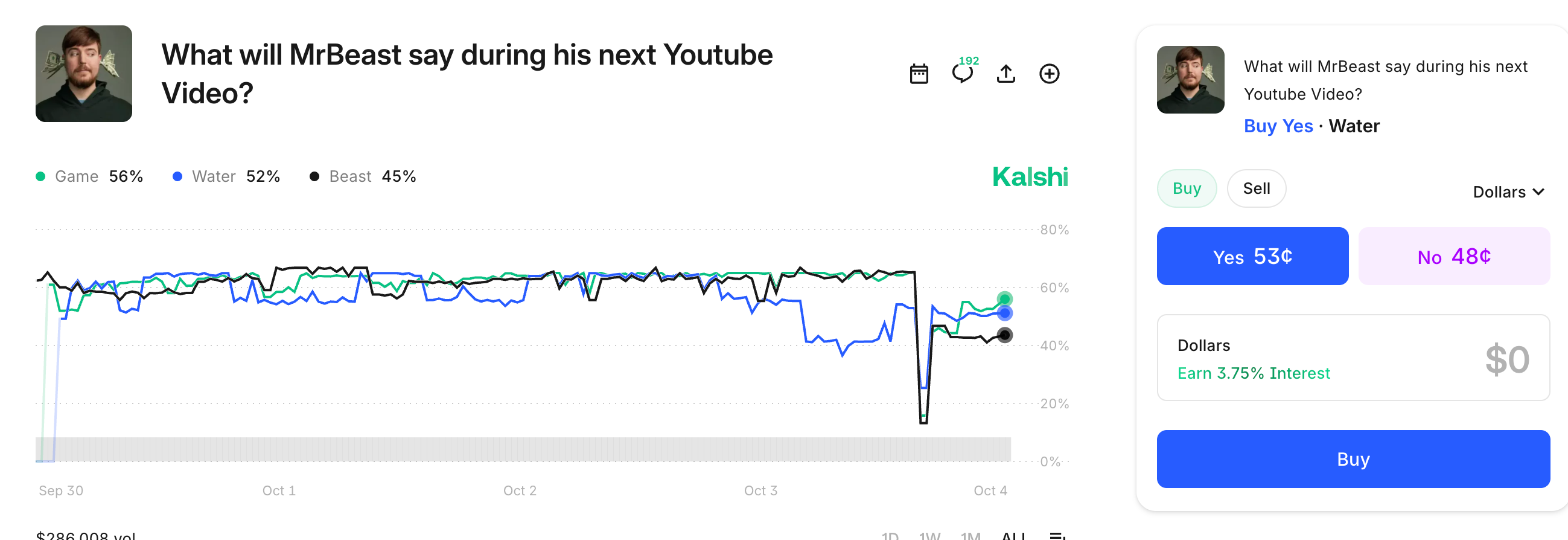
Another reason for the rising success of prediction markets is the diversity in markets they provide. You can make money speculating on whether Mr. Beast will use a certain word during a video, or even what the highest temperature in a given US city will be tomorrow.
How Can We Actually Make Money Using Prediction Markets?
In my view, there are four main ways to make money with prediction markets:
Subject Matter Expertise within a given field. If you’re a meteorologist, you could probably make some money predicting the highest temperature in a given city with that edge.
Pros: High level of knowledge within a field gives you confidence and hopefully an edge while making predictions about that field.
Cons: Directional risk. You may be an expert but variance could always wipe that away, or you may just be less of an expert than you think.
Correlation between prediction markets and other financial assets. (crypto, stocks, real estate) Given that there are prediction markets for crypto prices, interest rates, and recessions, it’s pretty clear that you could draw connections between a prediction markets estimate of an event occurring and the effect on XYZ financial asset based on that event.
Through scenario analysis you can try and price said asset accordingly. The problem with this is that you’re making assumptions based on the aggregated predictions of market participants. While we assume that these aggregated predictions are accurate, there are times where they are not. (see the GFC, COVID, etc, etc.)Pros: Simple to understand: If Kalshi’s recession prediction market is pricing in a recession at a 60% chance and SPY 0.00%↑ doesn’t move, you should probably take a bearish position.
Cons: Prediction markets can be wrong, Directional Risk, Incorrect analysis of the events impact
Arbitrage between Prediction Markets. With multiple prediction markets, it’s not impossible that prices can fluctuate to an extent where you could buy one outcome for $0.45, another for $0.50 and profit $0.05 no matter the outcome. On enough contracts, that $0.05 could be a nice return.
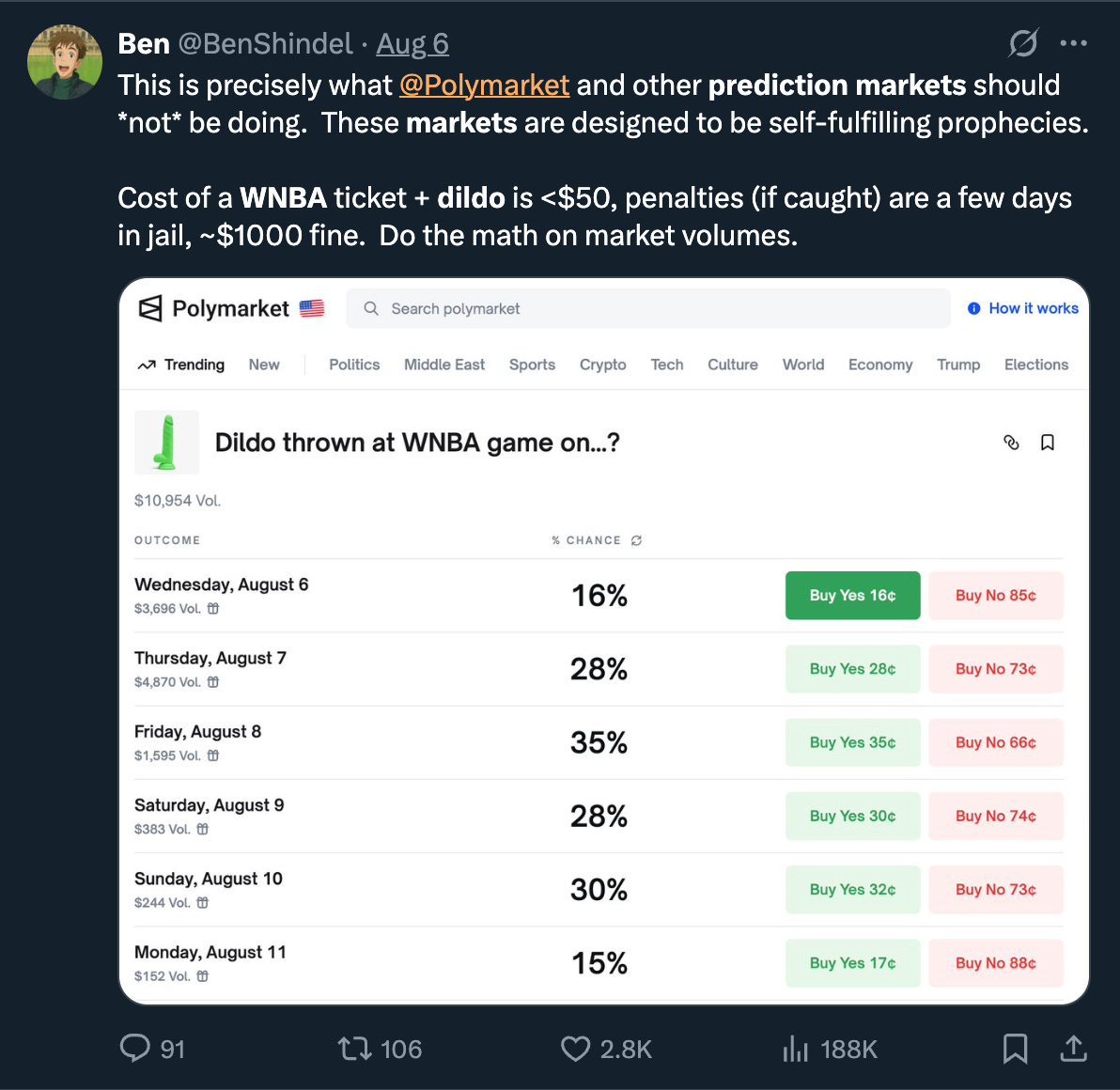
Insider Information/Activist Activity. If you were on Twitter in August, you probably saw clips of dildos being thrown onto WNBA courts during a game. After a couple instances of this, Polymarket created prediction markets for this “event.”
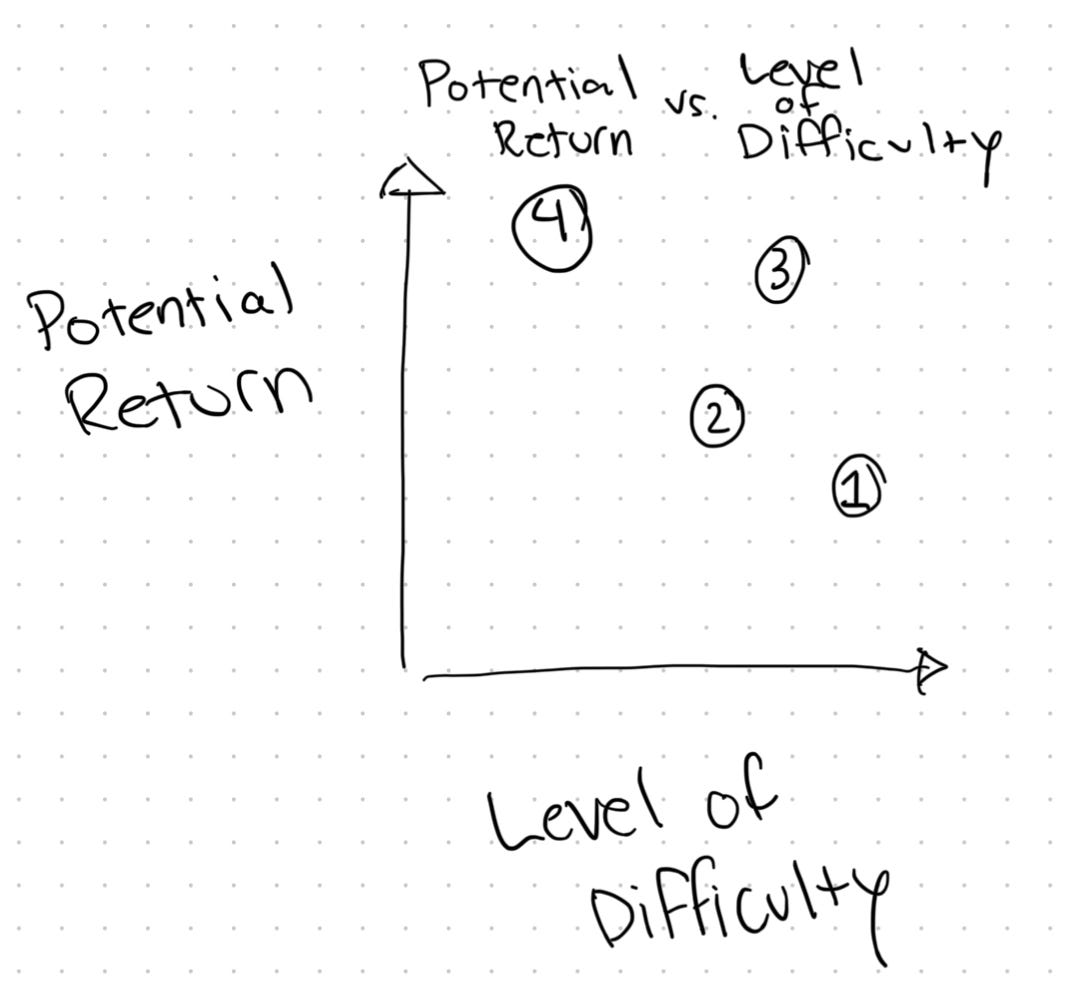
My Ranking of the Potential Returns of each strategy vs. Difficulty of each strategy: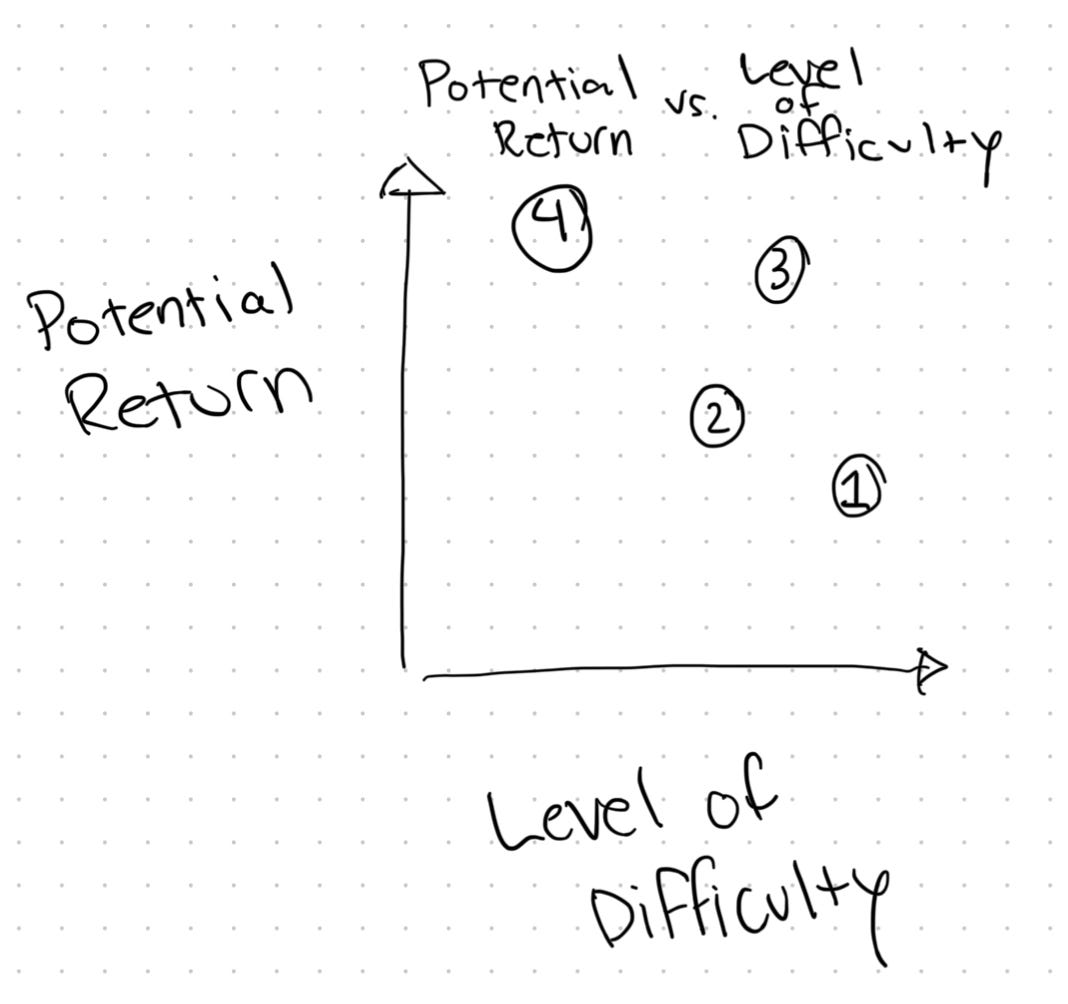
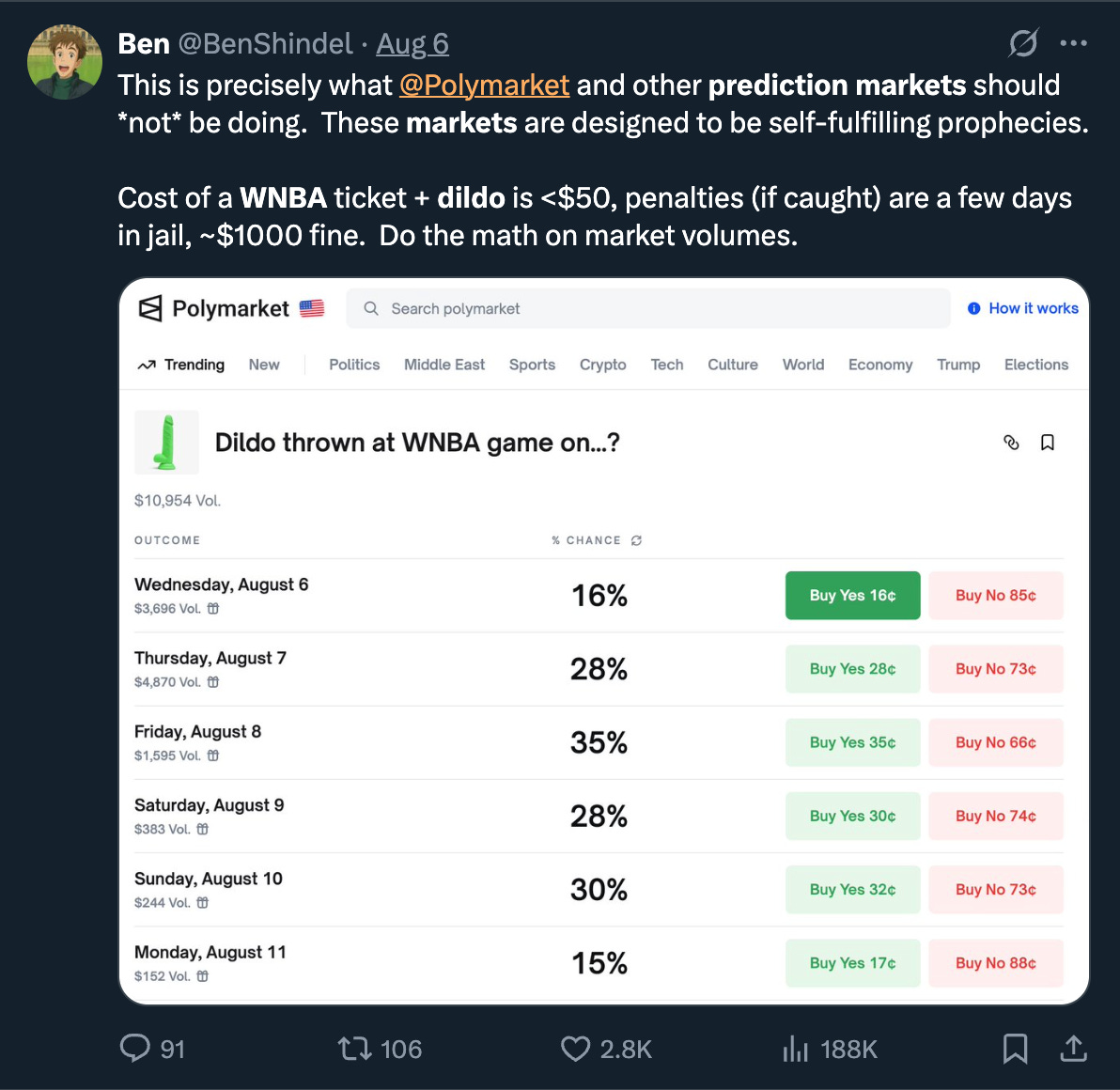
Like Ben says in his tweet, this is exactly what prediction markets should not be doing. This creates an incentive to buy this contract in large volumes and then go to the game and make sure it pays out. While immoral, this isn’t really insider trading and prediction markets in this format are so new that it’s pretty much the wild west.
That leads to my next point, which is that if I were an editor for Mr. Beast, I would have advance knowledge of what words he is going to say and can front run the prediction markets accordingly. It’s a wild time, and I am curious to see how prediction markets like Kalshi will manage this.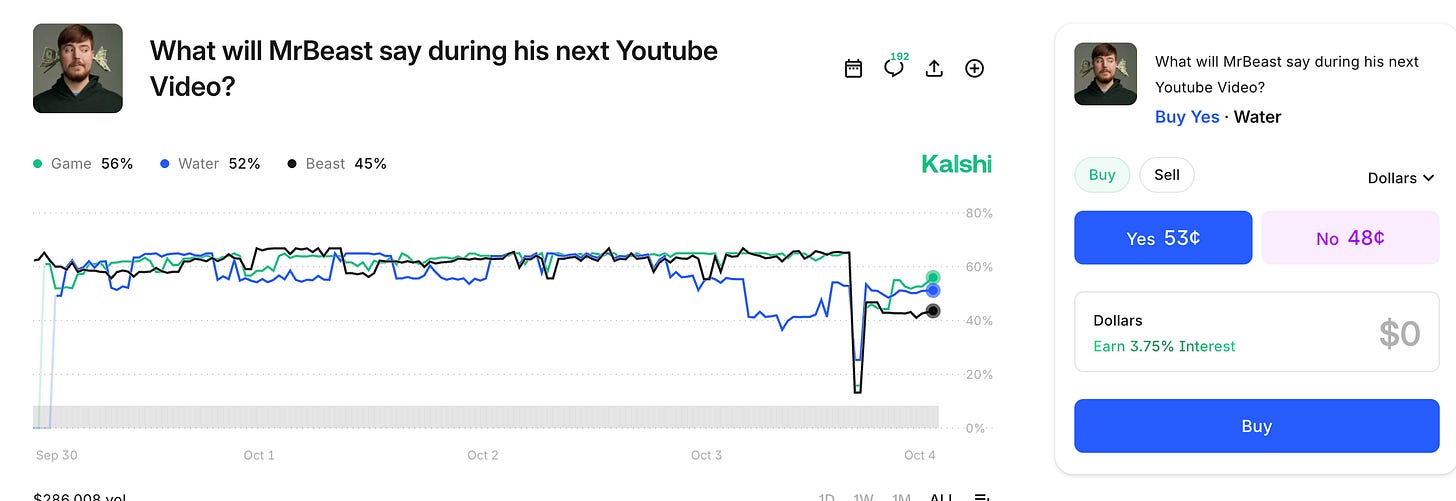
Please consider subscribing if you’d like to read my future analysis of the stock and real estate markets. In the future I plan to do more stock specific research on companies that interest me, as well as articles on what I believe companies are doing well or poorly and my recommendations for them.
In the meantime I have a catalog of stocks that I researched during my summer internship in 2024, which can be found here. I also summarized this research as well as some of my larger portfolio positions in this post.