

Bubbles are often compared to musical chairs, and I think it’s a fitting comparison. When the music stops, the people without a seat are done playing.
The stock market works the same way. In the dot com bubble, people were (correctly) sure that the Internet would change the world. It did. Yet if you invested in the wrong companies (or at the wrong prices) you could have lost a decade’s worth of returns, if not more. See INTC and others below:
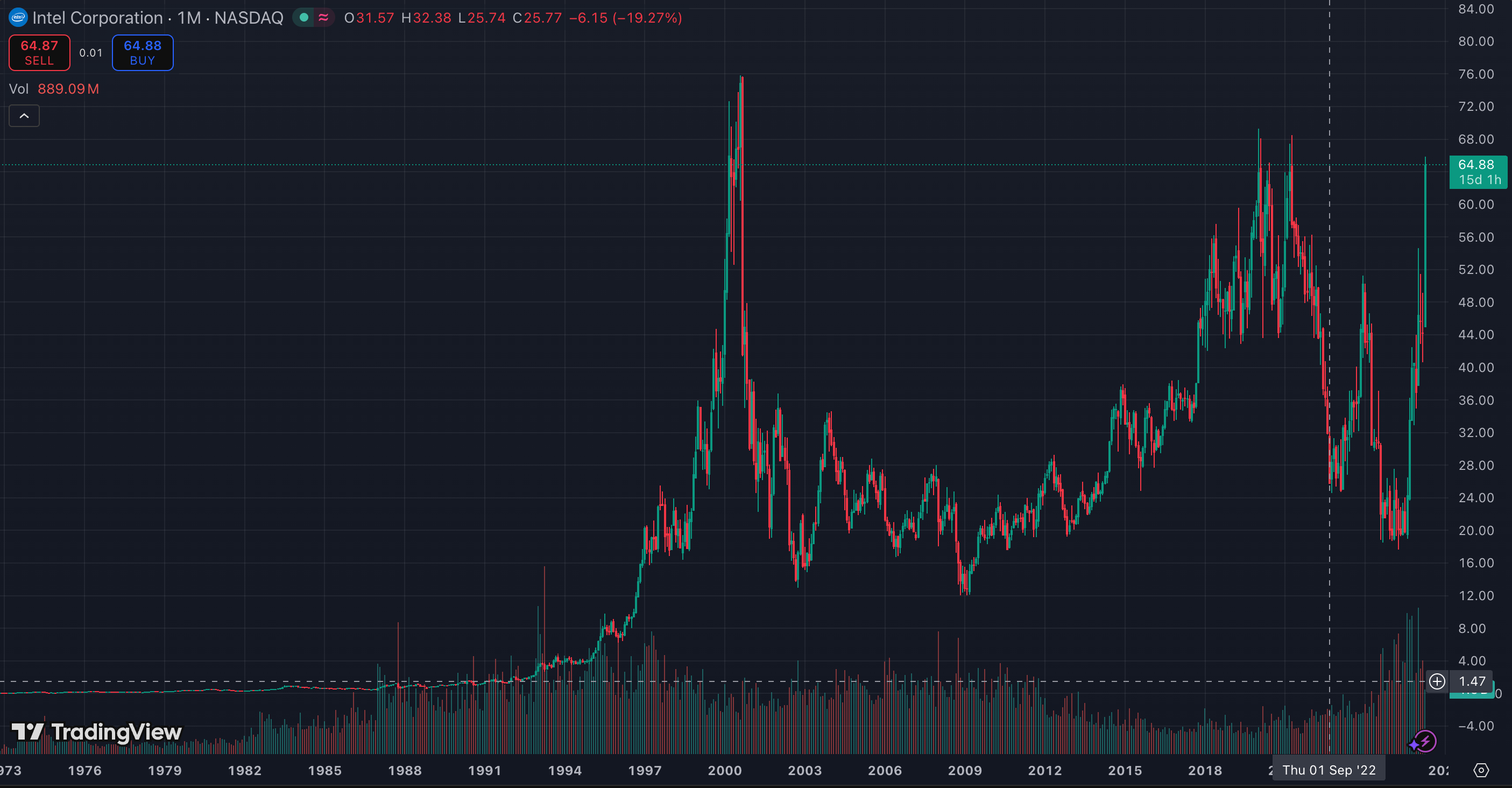
INTC: Not adjusted for dividends, if you bought at the higher levels in 1999-2000, you are still down to this day, two and a half decades later.
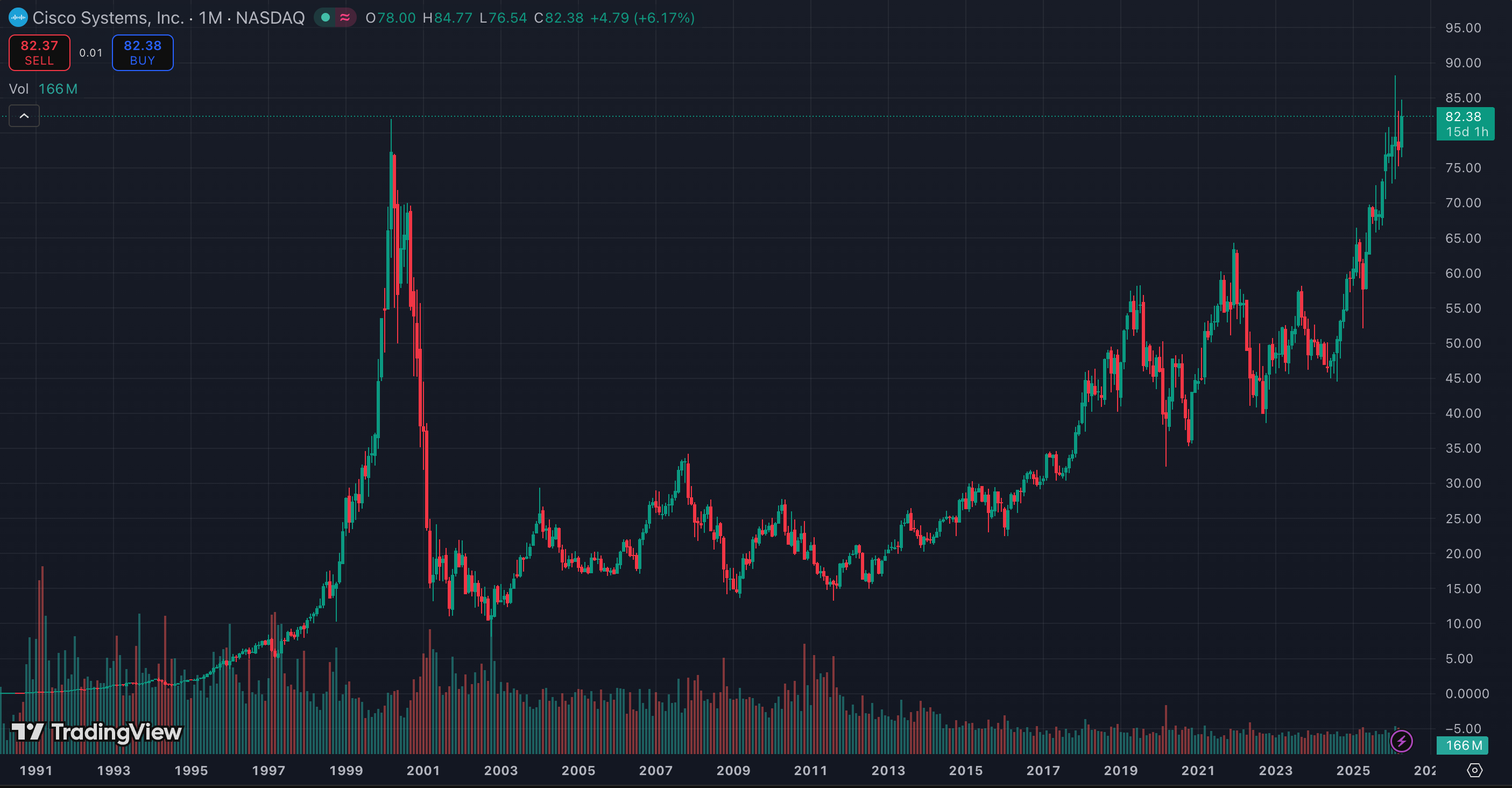
Cisco just recently reached the same levels seen during the peak of the internet bubble.
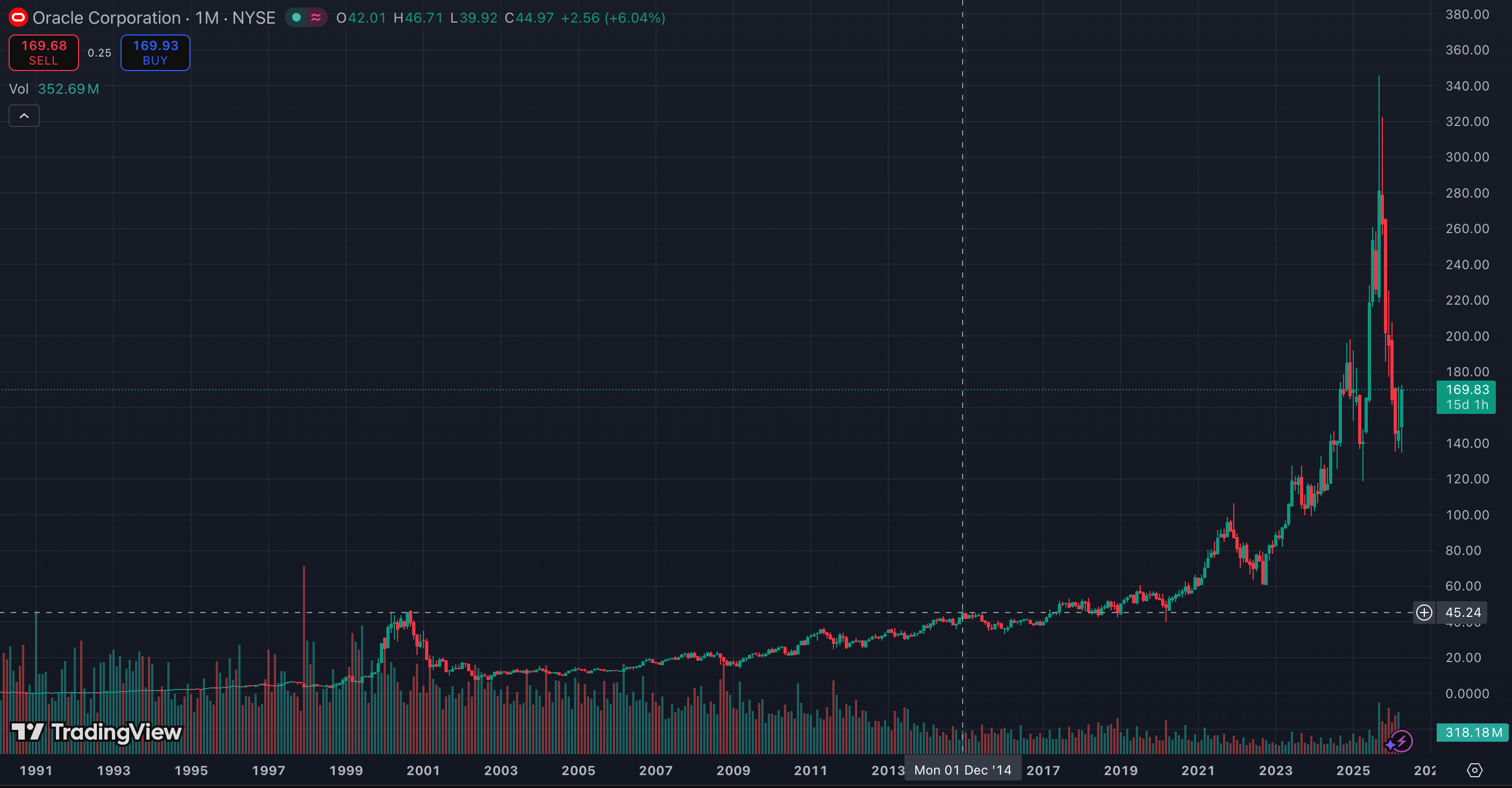
It took ORCL 14 years to reach the levels seen in 2000.
These are the companies that survived the dot-com bubble too, there are countless others that didn’t. We are likely to see companies that don’t survive this cycle either.
What’s the Point?
I’m not mentioning these companies because I foresee some massive downturn in the market. In fact, I am very bullish on AI, and many of the largest positions in my portfolio, like EWY, hinge on the continued performance and demand for AI compute.
I am writing this as a reminder to myself and others to not get carried away with the irrational exuberance that is often seen at the top of bubbles.
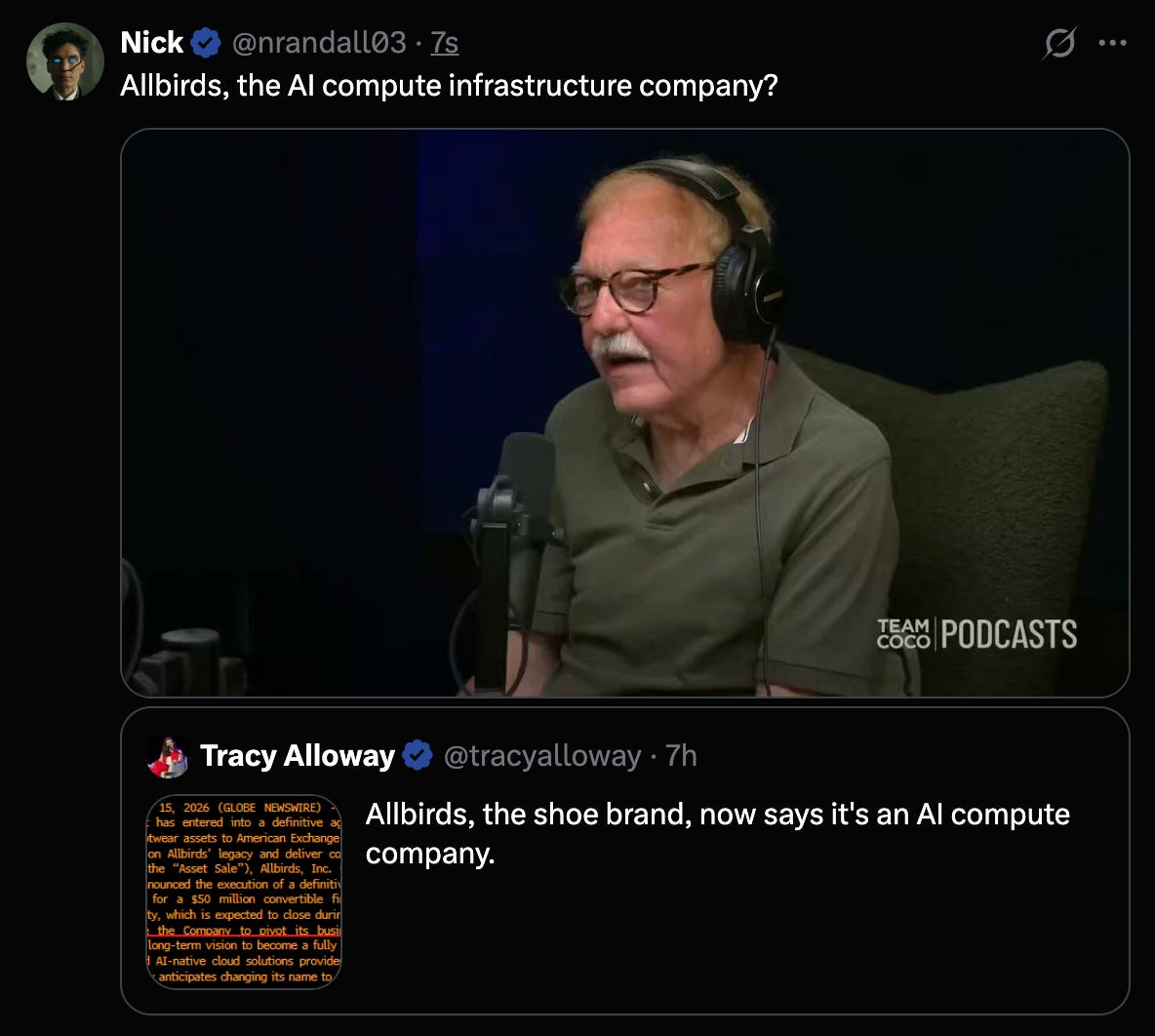
Allbirds (formerly a shoe company) recently just pivoted into selling AI compute. The stock is up 300% today (sorry 700% now). These are not normal market moves, and while it could be justified, I think it is rational to flag these as at least mildly concerning developments.
Regardless of whether or not you believe that AI is the real deal, and that it is going to deliver massive returns, you should still be rational with portfolio allocation, and in that effort I have some recommendations.
Actionable Advice
Recently, I have been adding more defensive positions to my portfolio, and I think this makes sense for many reasons. Firstly, they act to lower your Beta, or correlation with the broader market. Secondly, they are more resilient in tough times (like if the Iran War were to re-escalate.)
Thirdly, they help you position for the binary-like outcomes that come with the development of AI. To explain, let’s say AI really works out and replaces tons of white collar workers, leading to mass unemployment. Consumer spending would theoretically fall drastically in this outcome. Consumers would still spend on staples, as they have to in order to survive.
On the flip side, let’s say AI capex falls through. Companies don’t see ROI, LLMs are good, but don’t deliver the economic returns that the massive capex spending necessitates. Humans will still be working, unemployment will go down as companies see that AI isn’t going to replace workers the way they expected it to. Consumer spending goes up in this scenario, and defensive stocks would be fine, if not up more than the broader market.
In conjunction with being long AI, a defensive positioning makes sense to me. The S&P 500 is already ~35% mega-cap tech, so a "neutral" broad-market allocation already carries significant AI exposure. A rough framework: 25% direct AI, 25–35% defensives, with the remainder in the broader market. Obviously this is broad advice and should be adjusted based on age, risk tolerance, etc.

AI works out —> AI positions up, broader market up, defensive stocks flat/underperform
AI doesn’t work out —> AI positions down, broader market down, defensive stocks flat/down less than broader market.
Median outcome (my assumption) —> AI positions up, broader market up, defensive stocks up/flat
Obviously the median outcome is quite vague, but I picture it being a scenario in which AI is successful, delivers returns, but doesn’t quite change the world over the next 3 years. AGI doesn’t come (yet) and you want to be positioned in the picks and shovels (semis) rather than the LLMs themselves.
Concluding Thoughts
This is all to say I don’t really know what’s going to happen. No one does. I would be hesitant to take financial (or any) advice from anyone speaking in certainties on AI. While there are many reasons to be optimistic, there are also many reasons to be cautious. Oftentimes, the truth lies between the two extremes and it is my belief that it is best to be positioned to benefit from the widest range of outcomes. The music is still playing, and it may be for some time. Just be ready for whatever comes next.
Disclaimer: This is not financial advice, do your own due diligence please.