

The Formula To Beating The Market
I believe there is a simple formula to beating the stock market and in this post I’ll explain how it works.
If you stick around to the end I’ll even share with you why I think Warren Buffett, Peter Lynch, and other investors are so successful.
To use this formula however, you have to understand certain things about the market.
The first thing you must understand is that the market is NOT efficient. This goes against what your professors at college will tell you, but it is true. If it wasn’t true, how would Buffett outperform the S&P 500 for decades? How would any fund manager? It’s a concept that sounds smart in theory but doesn’t hold up to simple logic. Is the market accurate? Most of the time, yeah. But is it an efficient supercomputer seeing infinite possibilities and pricing in their likelihood at any given moment and reflecting that back into the current price of a stock? No.
The Stock Market is an example of the phenomenon known as the Wisdom of The Crowd. The ‘wisdom of the crowd’ is the theory that the “collective judgment of a large, diverse, and independent group of individuals can be more accurate and insightful than that of a single expert or even the smartest person in the room.” The classic example of the wisdom of the crowd is the estimation of an ox’s weight. In this scenario, a large group of people are polled on what they think the ox weighs, and while their individual guesses are often wrong, the average of their guesses was extremely close to the actual weight.

The stock market draws very close parallels to this example for good reason. Investors, speculators, market makers, are all individuals in the crowd. Some of these market participants have larger weight in the polls because they are moving more money. But overall, the parallel holds and the price of any stock is what market participants decide by their buying and selling of said stock.
From what I’ve said so far, you might be thinking well this all sounds like it would make the market more efficient? How is the market inefficient if we have all of these people making estimates of a stocks value at any given moment.

The reason the market is inefficient because market participants buy and sell stocks with incomplete information. There is no way of knowing how much money a given company will make in the next year. While we can make estimates, discounted cash flow models, and look at prior income statements, we will never truly know. Mark Zuckerberg doesn’t know what META 0.00%↑ will make next year. Jensen Huang doesn’t know how much NVDA 0.00%↑ will make next year. These CEOs might have a better idea than market participants, but no one, not even the people inside the company know. Not due to their own faults, but it’s just unknowable.
While tools like discounted cash flow models, comparable analysis, sum of the parts analysis are helpful, they can only help you build towards more complete information.
Think about Nancy Pelosi and other politicians. How do they beat the market? They have more complete information — they know when congress is going to pass a bill that benefits a certain company. Warren Buffett credits reading as the reason he was so successful in the market. He’s not reading just anything, he’s reading financial reports, balance sheets, 10-k’s, etc. all in hopes of gaining more complete information to make his predictions with. This is why we trust insider buying/selling (more so selling) as valuable signal towards what the stock could do in the near term. While company executives don’t have complete information on the company’s performance — they have more complete information.
You’re probably thinking all of this is well and good, but how does this help me make money in the stock market? If everyone’s information is incomplete, how does anyone outperform the market? The answer to beating the market is simple.
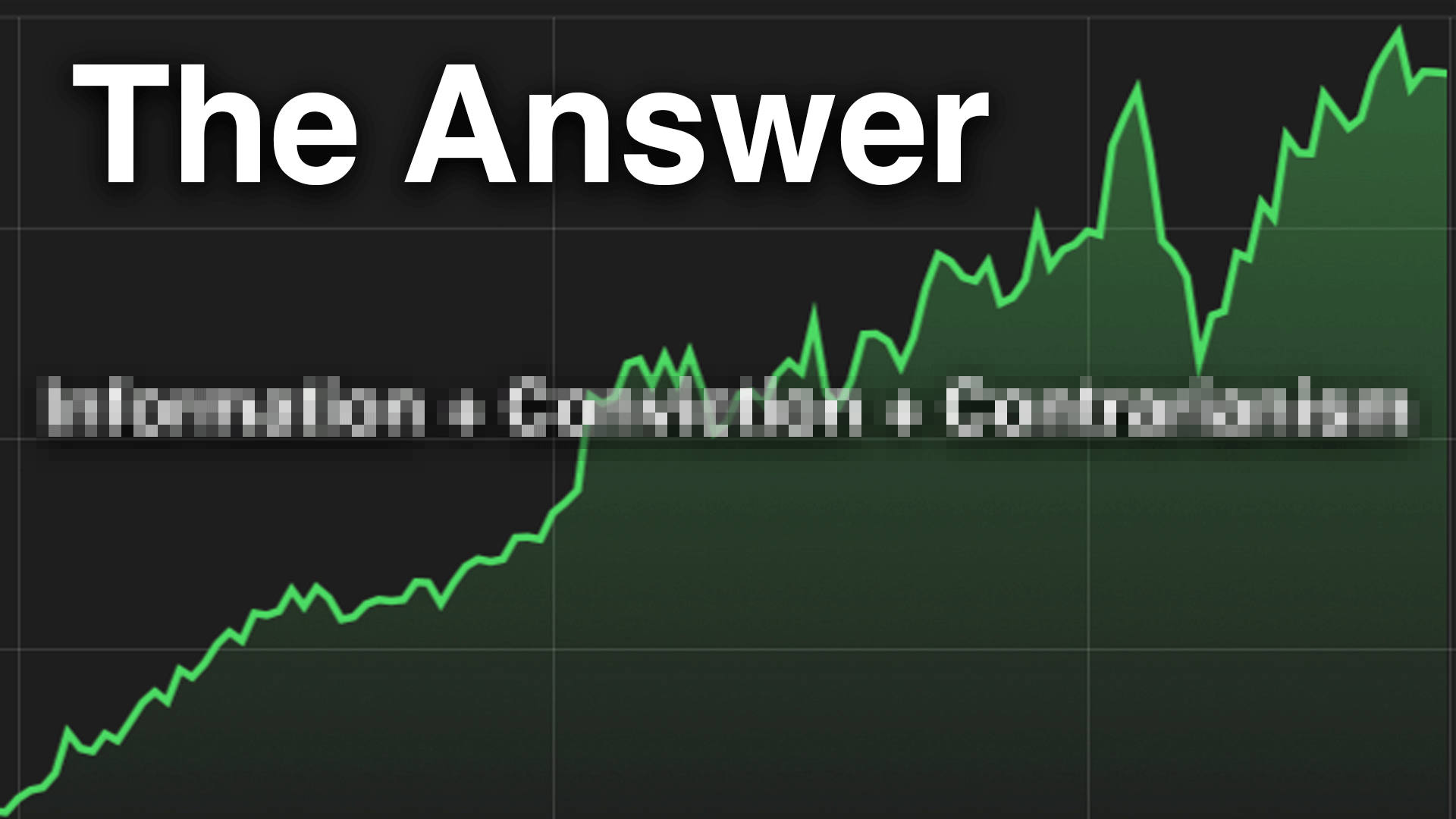
You need 4 things. More complete information, conviction in that information, the outcome based on that information, and that the information has to be counter to popular belief or contrarian to some extent.
The first step to beating the market is having some prediction of where a stock will go based on your research. If you did research into Apple and determined that the latest iPhones they released are going to underperform in sales that’s step one. The second step is being able to hold that prediction despite the market moving against you. That’s not to say if your belief changes you have to hold to your priors, but if you still believe in your prediction, you have to tune out the emotions that the market will put on you. Let’s say you short Apple based on your prediction, and the next day Apple rips up 20%. If you really want to make money you need unshakable confidence in your prediction despite market movements.
Think about Michael Burry during the 2008 global financial crisis. Investors were panicking, calling him telling him to close his position. It seemed like he was burning money daily. But what did he do? He held firm and was rewarded handsomely.
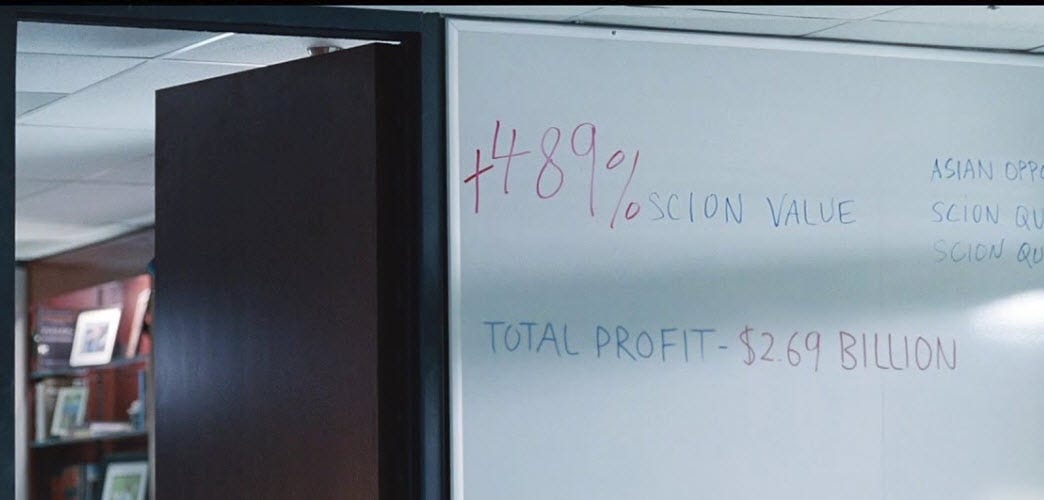
You also need to project what will happen based on this information. It’s not enough to think that Apple will go down based on your research. How much will Apple re-rate by? What will happen to their overall revenue? What does the combination of those two do to Apple’s valuation? When will you get information to confirm or dispel your hypothesis?
The last step is the most crucial to me. You have to be contrarian in your beliefs if you really want to make money in the market. There’s no alpha in doing what everyone else is. If everyone thinks that Apple is going to zero because the latest iPhone lineup sucks, you better believe the stock will be re-rated to reflect that market belief. There’s no money to be made when everyone is thinking the same thing.
Think about the most successful traders or investors. If you think about their methodology, they often credit a unique edge that led to their success.
A few examples would be:
Warren Buffett — claims much of his edge comes from his rigorous amounts of research and diving into company reports.
Peter Lynch — famously invested in what he knew, he emphasized going to stores, visiting companies firsthand to understand the customer experience and the value that company provided.
Chris Camillo — his edge comes from alternative data, he goes on social media platforms like Tiktok and Instagram to see public sentiment on a company’s products or recent launches.
What do all of these successful investors have in common?
They found their unique edge that they had a passion for and had skill with. Do you think Buffett would be successful if he didn’t read as much as he does? Would Peter Lynch have averaged an annual return of 29% if he didn’t go to the stores he was doing research on?
The thing about being successful in the market is that it’s not just about what I’ve gone over in this post. It’s about finding your unique edge that you can continue to perfect over the years.
Buffett didn’t become successful overnight. It took consistency, hardwork, and dedication to his process and that’s something I hope to emulate with this Substack.
Please consider subscribing if you’d like to read my future analysis of the stock and real estate markets, as well as the rise of prediction markets. In the future I plan to do more stock specific research on companies that interest me, as well as articles on what I believe companies are doing well or poorly and my recommendations for them.
In the meantime I have a catalog of stocks that I researched during my summer internship in 2024, which can be found here. I also summarized this research as well as some of my larger portfolio positions in this post.
Didn't expect to see someone challenge the efficient market so clearly! Thank you for breaking this down. It's so important to understand that complexity, even with the "wisdom of the crowd", isn't an efficient supercomputer. This perspective really clarifies alot for me.